


Join us in person or on Facebook live at 10:45 am.
Jesus says, “Give back to Caesar the things that are Caesar’s, and to God the things that are God’s.” What things are God’s?
Here’s the link to the song lyrics and Bible texts for this Sunday: http://bible.com/events/44743352
Read Matthew 22:15-22
I think it’s kind of funny that we’re talking about this scripture in which Jesus is being questioned on the same week that the news has been full of people being questioned. The Senate Judiciary Committee has been questioning Supreme Court nominee Amy Coney Barrett.[1] There were two town halls in which a moderator and local citizens were questioning the presidential candidates.[2]
In our reading from Matthew, some Pharisees and Herodians are questioning Jesus. They are trying to get Jesus to say something that can be turned into an accusation against him. They’re trying to entangle him in his own words.
When is it easiest to get somebody tangled up in their own words? When they aren’t telling the truth.
Sir Walter Scott, in his epic poem Marmion, says it best: “Oh what a tangled web we weave when first we practice to deceive!”[3]
But when someone is telling the truth, it’s hard to entangle them. And when the person being questioned is Jesus, it’s even harder. Jesus is the eternal Son of God, who possesses the fullness of God, including the attribute of omniscience (Phil. 2:6; John 21:17). He knows what they’re up to.

One of the reasons Jesus calls them hypocrites is that they say, “We know you are true and teach the way of God in truth” (v16). But they don’t believe he is the Messiah. They think he’s a heretic, a false Messiah. They actually expect him to lie, and so they’re trying to catch him in a lie.
So they ask him a question about Jewish law. “Is it lawful to pay taxes to Caesar or not?”
This seems to us like a no-brainer. Of course you have to pay the taxes. That’s how the government works. That’s probably why the Pharisees brought the Herodians along – so they could arrest Jesus if he says not to pay taxes.
But it’s more complicated than that. This tax they’re asking Jesus about is a tribute tax. When we pay tribute to someone now, we don’t mean with actual money, we mean that we give them honor and praise. But in that time, it was one of the ways a conquering government took over the people – by demanding money from them in tribute. In a sense, it was a form of worship. And the Caesars considered themselves to be gods.
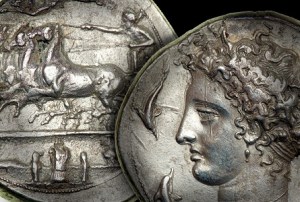
But the Torah, in the Ten Commandments, says, “Thou shalt have no other gods before me.”
So did it break God’s law to pay the tribute tax to Caesar?
This approach to entangling Jesus is very similar to the trap that was set for Daniel that got him thrown into the lion’s den. In the book of Daniel, we read about this man who was one of the Jews that had been carried off into captivity in Babylon in the year 605 BC. Daniel was given a position in the government and gained favor with King Darius because of his wisdom and integrity. Not surprisingly, some of the other government officials were jealous of Daniel’s success, and so they conspired to trap him by talking the king into making a law that required everyone to worship only the king, and anyone who breaks the law would be thrown into the lions’ den. They already knew that it was Daniel’s practice to bow down on his knees in worship and prayer three times a day facing Jerusalem, praying to God, and so they only had to watch and wait to see Daniel breaking their new law. The officials went immediately to the king and told on Daniel. The king didn’t want to throw Daniel in the lions’ den, but he couldn’t figure out how avoid it. So Daniel was arrested and thrown in with the lions. The king sent him with this blessing:
“May the God whom you serve so faithfully rescue you” (Daniel 6:16).
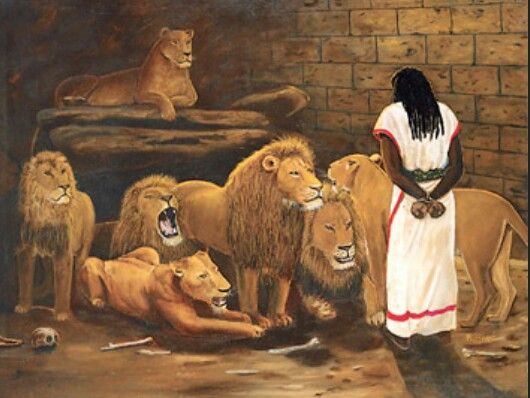
The next day, when they went to the lion’s den to check on Daniel, they found him alive and without a scratch on him. Daniel said, “Long live the king! My God sent his angel to shut the lions’ mouths so that they would not hurt me, for I have been found innocent in his sight” (v22).
The government officials thought they had laid the perfect trap for Daniel, but in the end it came back to bite them, because the king then had them thrown into the lions’ den.
The Jewish leaders and Herodians seem to have borrowed a page from Daniel’s story and tried to catch Jesus paying homage to the emperor, a human idol.
I wonder what they thought Jesus was going to do when he said to them, “Show me the money” (Matt. 22:19). If we have heard this story before, our minds may jump right to what happens next, but before we get to that, let’s think about this moment first.
Jesus says, “Show me the money. Show me the coin we would use to pay this tax about which you are asking me.”
Did they think that Jesus was going to take their money like a bribe? That they were going to get the opportunity to buy his silence?
They certainly knew that money has the power to change people’s minds. The phrase, “Show me the money” is used famously in the movie “Jerry Maguire” to do just that. Jerry, played by Tom Cruise, is a sports agent who hasn’t been doing a very good job for his client Rod Tidwell, played by Cuba Gooding Jr. Tidwell is threatening to leave and challenging Jerry to prove his worth by getting him a lucrative deal. He says, “Show me the money.”[4]
I’m betting that the pharisees and the Herodians, when they heard Jesus say, “Show me the money,” were thinking, “Now we’ve got him.”
They should have known better.
Jesus, ever the teacher, gets them involved in finding the answer. He asks them, “Whose image and inscription is this?”
They answer, “Caesar’s.”
So Jesus said, “Well now I’m hungry for salad. Somebody get me a Caesar.”
No, just kidding. He said, “Give therefore to the emperor the things that are the emperor’s, and to God the things that are God’s” (v21).
Or what may be the more familiar version, “Render therefore to Caesar the things that are Caesar’s, and to God the things that are God’s.”
I actually prefer the word “render” here, because to render means to give back.[5]
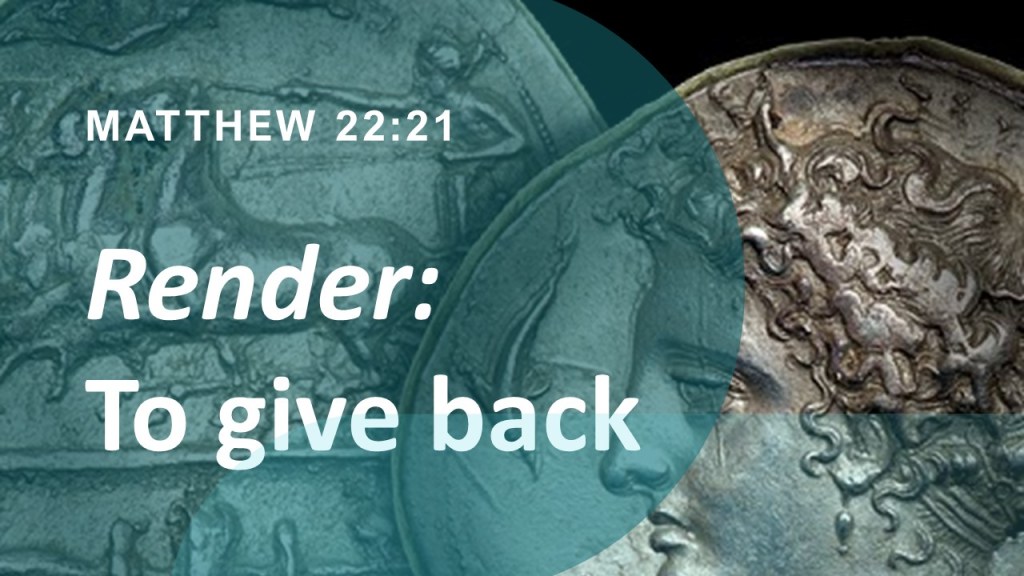
We render meat when we cook it and it gives back the fat.
We render the money, because the coin belongs to the emperor and he’s letting them use it as a means of exchange to facilitate transactions,[6] but in return he requires a portion of it back. He’s entitled to it because it was his to start with. That’s actually true of our money even today.
Give back to Caesar the things that are Caesar’s, and give back to God the things that are God’s.
Following the logic of the image stamped on the coin, then what are the things that are God’s? What is stamped with the image of God?
The Bible says in Genesis that we humans are made in God’s image (Gen. 1:27).
So how do we give ourselves back to God?
How do we give ourselves to anything? We put our whole hearts into it. We do it with love. With passion.
When we find something or someone about whom we are passionate, we lose track of time, we don’t care how much trouble it takes, or how much it costs, we give our all to following our passion.
Jesus knows this about us. He says, “Where your treasure is, there will your heart be also” (Matt. 6:21).
If we want to follow Jesus and make him our passion, we can expect that this means putting our whole hearts into this pursuit – time, money, and effort.
Another way Jesus says this is in the Great Commandment, to “Love the Lord your God with all your heart, soul, mind and strength” (Matt. 22:37).
With our whole lives.
But what actually drives our day-to-day decisions?
Probably at least some of the time the decision maker is our money, our time, or our energy. Or maybe our lack of it. But if we belong to God and not to money or time, if we want God to be the Lord of everything in our lives, one of the ways we pay tribute to God and acknowledge that we want to be the people he made us to be is by giving back to God some of our money and our time and our effort.
We set aside some of each paycheck to give to the church, we set aside some of our time every day to spend with God, we set aside some of our energy to volunteer, to do something for someone who isn’t paying us to do it.
Jesus says, “Give back to the emperor the things that are the emperor’s, and to God the things that are God’s.” “Render unto Caesar.”
That word “render” also has another meaning that I really like. To create something or to cause something to become. It’s a process. And it’s a process that sometimes takes a long time. Often the bigger the undertaking, the longer it takes.

Like rendering video. That used to be something that only people with expensive equipment and software could do. Now our phones and computers all come with cameras and video editing software. I’ve used it to make a few videos for songs. The process involves assembling all the pieces – the music, the lyrics, the video clips and photos – and adjusting the timing so they work together right. After that’s all done, there’s a little button on the software I use that says “finish the video.” In more sophisticated software it actually says the word render. What happens after I click that button is that the video is rendered. Everything I put into it is composed into a playable file. If I made a short video, maybe a minute or less, rendering doesn’t take very long. But if I’m making a longer video, that can take quite a bit more time to render. And my computer is a little slow, so it takes even longer. I have learned to walk away and get a fresh cup of coffee, and let it do its thing, rather than sit and get mad at it for taking so long.
It’s like that for rendering our lives unto God. It takes time. The Apostle Paul says in 2 Corinthians 3:18 that we are being transformed into the image of God. That takes a lot of time. If a three-minute video takes ten or fifteen minutes to render, imagine how long a lifetime video takes. It takes a lifetime, because that’s all the time we’re given. And it won’t be complete until the very end.
It’s a process. It began long before we were born when God planned for our salvation through Jesus Christ. God loves us so much that he made sure we would know it and be able to return it. God gives us his love and we give back by all the ways we allow God to help us with our decisions, and to guide our actions, and to have our trust.
To render is also to draw a picture. With every piece of our lives we are drawing a picture of the one who made us and gave us life.

- God is generous, and when we are generous, we draw that into the picture.
- God is loving, and when we are loving we draw that into the picture.
- God is patient, and when we are patient we draw that into the picture.
- God is merciful and just, and when we are merciful and just we draw that into the picture.
You get the picture?
So how is your rendering process going?
What are you holding on to that you need to give back?
In what ways is it time to let go and let God work on the rendering?
[1] https://www.npr.org/2020/10/15/923637375/takeaways-from-amy-coney-barretts-judiciary-confirmation-hearings
[2] https://www.theguardian.com/us-news/2020/oct/15/trump-biden-town-halls-two-channels-two-candidates-two-planets
[3] Not Shakespeare, but Sir Walter Scott in the poem Marmion. https://en.wikipedia.org/wiki/Marmion_(poem) You can read the whole poem here: https://www.gutenberg.org/files/4010/4010-h/4010-h.htm
[4] Jerry Maguire (1986), directed by Cameron Crowe, https://www.shmoop.com/quotes/show-me-the-money.html
[5] https://www.merriam-webster.com/dictionary/render
[6] https://www.cliffsnotes.com/study-guides/economics/money-and-banking/functions-of-money#:~:text=Money%20serves%20as%20a%20medium,of%20exchange%20to%20facilitate%20transactions.

 United Presbyterian Church