


Watch on YouTube
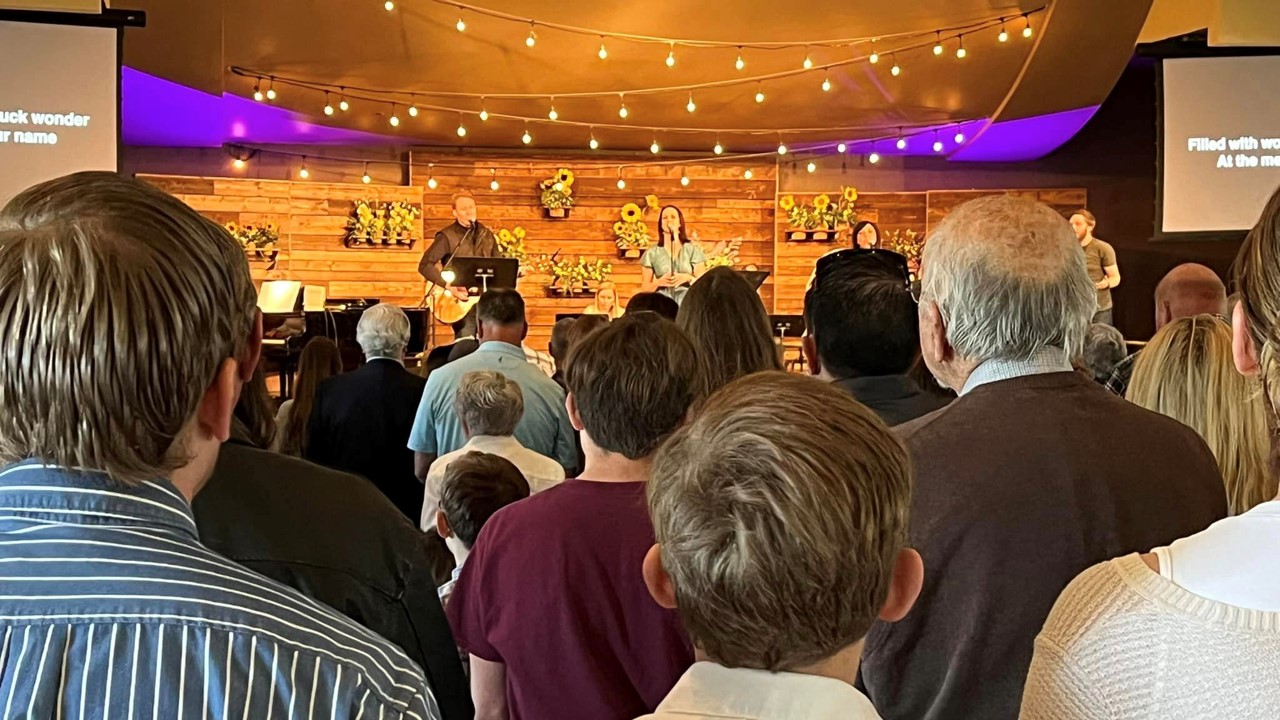
When Rob and I were first married, I remember going to church and being annoyed that it seemed like the pastor thought everyone there was depressed or struggling. I was annoyed because we were newlyweds, and we were on top of the world. Ah, young love. Everything was beautiful and wonderful to me then, and the church seemed so out of touch with where I was. Now I’m annoyed with my young adult self because it never occurred to me back then that there were people there who needed to be encouraged, or that I could be compassionate and caring about them.
Right now some of you might be hurting, and some of you are having a great day. Maybe the hardest part is that from the outside we can’t tell. Sometimes it shows on our faces or in our posture, but mostly we can’t tell just by looking at someone.
So how might we find out if someone is hurting?
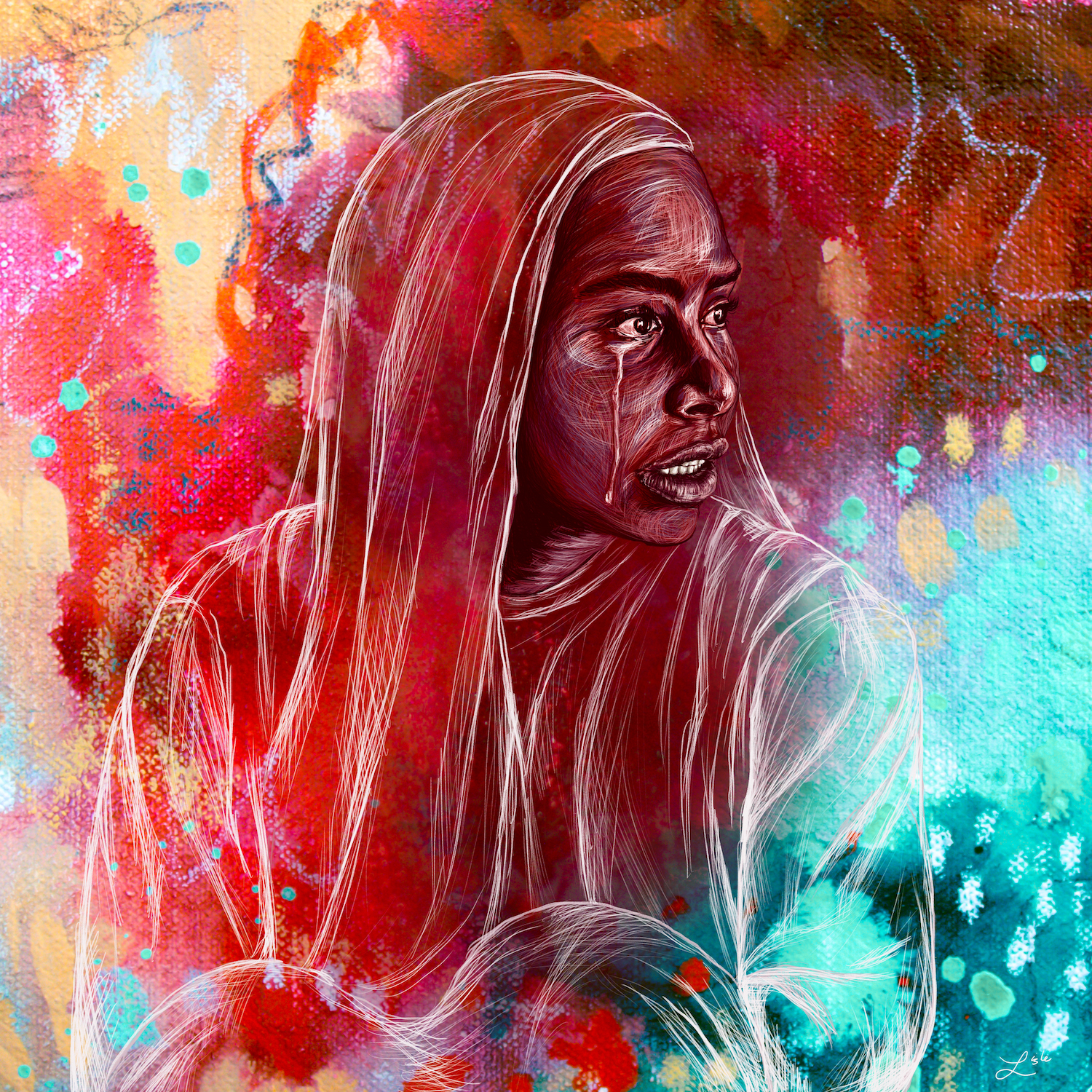
In our reading from 1 Samuel today, Hannah is the one whose pain is the most obvious. She has no children, and in that time and culture she probably felt she was not fulfilling her purpose. Hannah may have felt ashamed and useless, feelings that were amplified by the taunts of Peninnah, her rival wife. Hannah is whole just the way she is, but because of the pressure to have children, she feels inadequate and incomplete.
Her husband Elkanah sees her pain through her tears, but his questions to her are rather insensitive. Elkanah says, “Oh, Hannah, why are you crying? Why aren’t you eating? And why are you so upset? Am I not of more worth to you than ten sons?” (1 Samuel 1:8)
He obviously already knows why she’s crying and why she’s not eating. And it’s not about whether he’s worth more than ten sons. I wonder if he himself was hurting because he couldn’t make Hannah happy? He must have known that if he died before Hannah had children that she would be left destitute and homeless.
Elkanah’s other wife Peninnah might be the biggest problem. She makes fun of Hannah’s childlessness. How insensitive and mean! I wonder, though, whether Peninnah might have been jealous of Hannah because, as the text tells us, Hannah was the wife that Elkanah loved? Maybe Peninnah was mean because she wanted Elkanah to love her like he loved Hannah?
In today’s reading, the whole family has gone to Shiloh for the annual sacrifices. While the rest of the family is eating, Hannah slips into the sanctuary to pray. The priest Eli sees her sobbing inconsolably and silently mouthing the words that she is praying. Eli assumes that Hannah must be drunk. Poor Eli. Maybe the only time anyone expressed that much emotion in the sanctuary was when they were drunk? How frustrating that would be for a priest!
Accusing someone of being drunk is probably not the best way to begin a conversation, but that’s what Eli does. Hannah assures him that she isn’t drunk, and explains her situation, saying:
“Don’t for a minute think I’m a bad woman. It’s because I’m so desperately unhappy and in such pain that I’ve stayed here so long.”
In her prayer, Hannah has promised God that if God gives her a son, she will “give him completely, unreservedly” to God and “set him apart for a life of holy discipline.”
After Eli hears about Hannah’s pain and her prayer, Eli answers her, “Go in peace. And may the God of Israel give you what you have asked of him.”
Hannah replies, “Think well of me—and pray for me!” and goes back to her family. Then she ate heartily, her face radiant. (1 Samuel 1:11-18)
Hannah has cried out to God and through Eli is able to feel like God has heard her cry. Feeling seen and heard leads to healing, as she finds peace and hope that brings back her appetite and her smile.[2]
There was nothing anyone could do to fix Hannah’s situation, really. Maybe get Penninah to stop harassing her, and get Elkanah to be more understanding, but what makes the difference is that Eli listens and acknowledges her pain. Nothing has changed, and yet Hannah’s radiant face tells us that everything has changed.
Whether or not we ourselves have experienced the pain of infertility like Hannah, we may know what it feels like to have our pain, whatever it is, dismissed or made fun of. We might feel like we have to hide our pain because other people won’t think it’s legitimate. But there is no right or wrong way to feel.

Even physical pain can be challenging to address. Unless there’s bleeding or some other external injury, the medical team might be asking, “Where does it hurt?” They will ask for a pain rating on a scale of 1 to 10, and for a description of the type of pain.
Knowing that Kim Christian has been hard at work studying to be a nurse, I asked her about this. She told me that asking about pain tells the provider what to address first. That’s important, she said, because most people cannot heal when they are in pain, so the medical team tries to control the pain first.[4]
Acknowledging and identifying the pain is important in dealing with emotional or spiritual pain as well. Otherwise, we might find ourselves spending time and resource on trying to help with something that isn’t the problem.

When we lived in California, I worked for a laboratory that had started out small with a group of five scientists who specialized in tests for measuring the tiny amounts of hormones pediatric endocrinologists need to assess in babies and children. Over time the lab grew. By the time I started there it was a well-established company with a good reputation. So good, in fact, that the lab was bought by a bigger, national lab, and suddenly we had an IT department. I was happy about that because it meant I could now spend less time helping coworkers with their computers. But one day I was having a problem and I had to ask one of the new IT people for help. Here was this young man straight out of college who didn’t really listen to my problem. He just started doing things to my computer. He changed settings that didn’t need to be changed. I had things set the way I liked them. Eventually he did figure out the problem, but I spent the next few days putting all my preferences back the way they were. He thought he knew what I needed but he didn’t because he hadn’t listened first.
There are a variety of reasons why we might not listen. [Why don’t we listen?] Sometimes we don’t have time. Sometimes we avoid acknowledging someone’s pain because we don’t feel like we’re able to do anything about it. But what if we don’t need to do anything about it? Maybe people just need someone to listen and be present with them so that they don’t feel alone in their pain.

Terri Elton, in her book Journeying in the Wilderness, suggests that we miss out in participating in God’s ongoing work because we think we can’t help or that we don’t have the ability to do whatever is needed. She says, “We all have limitations, but do you believe you can continue to learn and grow? Limiting our capacity to learn and narrowing how we see our God-given abilities close us off to God’s ongoing work in us.”[7]
Maybe one of the biggest challenges of living a life of faith is that it is a journey in the wilderness, into the unknown. To keep going, we have to keep looking to God and trust that God will show us what we need to see.
Take, for example, Moses. When God spoke to him out of a burning bush and told him to go rescue the Israelites, Moses was full of objections and excuses. He was afraid, and doubting his abilities. “…yet God still called Moses. And that call was enough. In time, Moses embraced his mission and acted in faith. Moses did not need to know the future; he only had to trust God would point the way.” And it’s the same for us as we travel in the wilderness territory of living this life and following Jesus. “God sends, and we trust, and that is enough.”[8]
God may be sending us to be his presence to someone. Rather than avoiding having conversations with people on a deeper level, we can practice listening and trusting that the Holy Spirit will help us and guide us.
It’s important for us to acknowledge that we don’t need to try to fix someone’s pain. There are some things that only God can heal. Some hurts will never fully go away. The pain of losing a loved one lingers on in various ways. Chronic or terminal illness is not going to get better. But our willingness to be with someone in the midst of these can help someone feel less alone. Our presence might be one of the ways that God is answering that person’s prayers. Our presence and willingness to listen might be one of the ways that God is showing that person how much God loves them.
What if we thought about listening as a spiritual practice?
“Humans are wired to listen and also have a need to be heard.”[9]
Listening has the potential to change both the listener and the speaker as the Holy Spirit works among us. Listening connects us with one another and helps us to see God’s work in each other’s lives.
Today, to help us practice listening, we have a set of conversation cards for you, as well as a booklet for spending more time on this scripture and this subject on your own. Use the cards to think about God’s work in your own life, and to engage with other people about what’s happening in their lives.
We’re going to have an opportunity for connecting with each other on Wednesday night at 7pm here at church. We’re calling it “Cake and Conversation.” Georgia Vogt has promised us cake! Come join us if you can.
We often say that we are the hands and feet of Jesus. We are also the ears of Jesus. We can talk directly to Jesus in prayer, but it also helps to talk to one another, to support and encourage one another, and help each other to see how God is working in our lives.
How are you feeling today?
Whatever your answer, it’s ok.
Thanks, God.
[1] “Seen” by Rev. Lisle Gwynn Garrity / Inspired by 1 Samuel 1:1-18 / Digital painting with mixed media collage
[2] Rev. Brittany Fiscus-van Rossum, Pastor of Mercy Community Church, Atlanta, GA in “Sermon Planning Guide” from Sanctified Art LLC
[3] Photo by Pixabay: https://www.pexels.com/photo/brown-and-white-bear-plush-toy-42230/
[4] Kim Christian in text messaging on Tuesday, June 20, 2023.
[5] Photo by Pew Nguyen: https://www.pexels.com/photo/computer-set-on-the-table-13162091/
[6] Photo by Tobi: https://www.pexels.com/photo/person-walking-forest-walk-path-with-another-person-590798/
[7] Elton, Terri Martinson. Journeying in the Wilderness (Word & World) (p. 25). Fortress Press. Kindle Edition.
[8] Elton, Terri Martinson. Journeying in the Wilderness (Word & World) (p. 32). Fortress Press. Kindle Edition.
[9] Elton, Terri Martinson. Journeying in the Wilderness (Word & World) (p. 34). Fortress Press. Kindle Edition.

 United Presbyterian Church