


Watch on YouTube
Jesus says, “Anyone with ears to hear should listen and understand.” (v9) [1]
Were you listening? What did you hear? If you’ve heard this parable before, did anything strike you differently today?
It’s a story about a farmer planting seeds. Some of them grow and some of them don’t. When Jesus explains the story to his disciples, he says the seeds are the message about the kingdom of God. The seeds fall on four different kinds of soil, representing four different circumstances of people:
- On a hard footpath where it stays on the surface,
- on rocks where it can only put down shallow roots,
- among thorns which are cares that choke it out, and
- on good soil where it grows abundantly.
Who are we in this story?
We could be the soil receiving the seeds. We could also be the farmer scattering the seeds.
If we’re the soil, then we might be hard hearted and unable to receive the seed, or rocky and shallow, or full of worries, or nice, soft, welcoming soil. Which one are you today?
If we’re the farmer…well, let’s think about this for a minute. How do you plant seeds? This farmer in the story kind of plants like he’s got a never-ending supply of seed, doesn’t he? How many of us plant seeds this way, just throwing them out wherever?
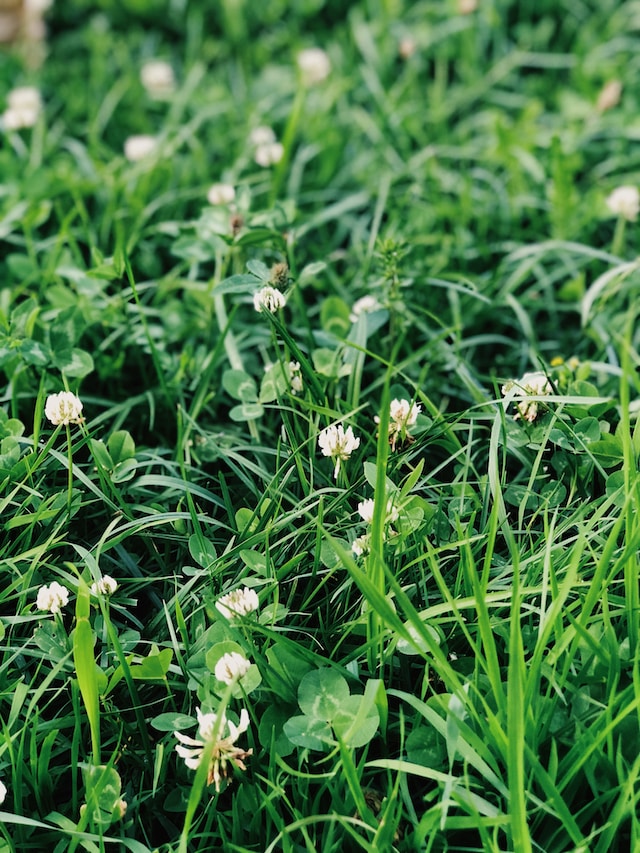
I’ll tell you what, that’s me. Earlier this year we were eager for our yard to get filled in and have less bare dirt because we had new puppies who were going to need to spend some time outside. A friend suggested that micro clover would be good for the dogs, so we bought a bag of micro clover seeds, put them in a seed spreader, and I went out and put them on all the bare dirt areas. But the spreader flings them everywhere, so they went beyond the lawn. It was during a rainy week, so the soil was a little soft, and I expected in a week or two we’d have lots of nice clover. But we didn’t. Another rainy week came along and I thought we needed to put out more clover seed, since the first attempt didn’t seem to do much. This time we used a different kind of clover seed, hoping it would do better, and I put it everywhere indiscriminately. Within a couple of weeks some of that sprouted, and not just in the lawn.
Now, several months later and more rain later, most of our dirt patches are filled in with various kinds of clover, and so are the planters and the edges of our gravel driveway. I didn’t do anything to prepare the soil. I didn’t do any extra watering. Some of it took longer than I wanted.
You might not be as indiscriminate as me in how you plant seeds in your garden or on your fields, but the farmer in the story is. Why would the farmer handle the seed this way?
Let’s think about what that seed is. The parable explanation says that the seed is the message of the kingdom.
What is the message about the kingdom of God?
1 John 4:8 says that God is love. God loves the world so much that he sent his son Jesus.
Love is the bottom line. God loves us. A. LOT.
So what are those seeds? They are love. God’s perfect, unfailing love for us all. Which he demonstrates through his grace for us all.
The farmer can be generous with the seed because the seed is God’s love and there is an unlimited amount of it. So it’s not like it gets wasted. I don’t think you can waste love.
We cannot earn God’s love. It is freely given.
“For he gives his sunlight to both the evil and the good, and he sends rain on the just and the unjust alike.” (Matthew 5:45)

If we’re the different kinds of soil receiving the seeds of God’s love, does God love us any less if we’re having a bad day, or a bad week, or a bad season? No. Thankfully.
Here’s a hard question…if we’re soil, can we change what kind of soil we are? Soil can’t without help. Sometimes we need help too. And we can pray and ask God to help us change. Then keep our eyes and ears open for opportunities to be changed.
Here’s something I think we often miss….how often do we plant seeds? Do we do it once and then never do it again? Or like me plant more every couple of weeks til I see something happen. The story only tells about this one time, but sowing seed doesn’t just happen once. The farmer doesn’t give up on the soil and God doesn’t give up on us. God is pouring his love out on us continuously.
Let’s think about this another way. What if we’re the farmer? Do we have seeds of love to scatter? We do, because God pours his love into our hearts through the Holy Spirit. (Rom. 5:5) With that love, we can help people be better soil by helping them get out of hard situations, addressing physical needs and emotional hurts, and remembering that sometimes its not going to be the right time for the message of God’s love to sink in, and so we’ll have to keep loving, just like God does.
We also need to remember that some seeds stay dormant for years before they sprout.
I’m not a skilled or patient gardener, so I do best with seeds that sprout quickly like beans. But some seeds can take weeks or longer. The oldest plant ever to be regenerated was grown from 32,000-year-old seeds. The story in National Geographic says that, “A Russian team discovered a seed cache of Silene stenophylla, a flowering plant native to Siberia, that had been buried by an Ice Age squirrel near the banks of the Kolyma River. Radiocarbon dating confirmed that the seeds were 32,000 years old.

The mature and immature seeds, which had been entirely encased in ice, were unearthed from 124 feet (38 meters) below the permafrost, surrounded by layers that included mammoth, bison, and woolly rhinoceros bones.
The mature seeds had been damaged—perhaps by the squirrel itself, to prevent them from germinating in the burrow. But some of the immature seeds retained viable plant material.
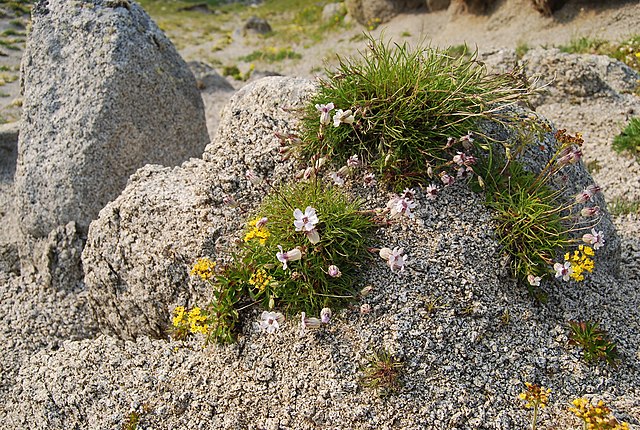
The team extracted that tissue from the frozen seeds, placed it in vials, and successfully germinated the plants… [and they] grew, flowered, and, after a year, created seeds of their own.”[6]
New life after 32000 years.
So whether we’re the soil receiving the seed, or the sowers scattering the seed, and even if we do all the right things, sometimes it will sprout and sometimes it will take awhile, but ultimately it is God who makes it grow. So don’t give up on yourself or anyone else.
Remember that Jesus was explaining this to his disciples who were going to be carrying on without him soon. They would get discouraged and frustrated. They would be challenged and imprisoned. But they needed to keep on spreading the message of God’s love, even when it seemed like nobody was listening or understanding.
Maybe if we truly, deeply believed that God loves us all the same, and that there’s enough grace for us to have it freely and share it freely, we would be more willing to see those concepts at work in more areas of our systems and culture.

You know what else falls on the just and the unjust alike? The sun and its heat. This summer our world is experiencing hotter temperatures than have ever been recorded. Everyone on the planet is affected by it. Not everyone is equally able to deal with it. I continually give thanks to God for air conditioning, but not everyone can afford it. And the more we use it, the more we are using the fossil fuels that generate the electricity to run it, which creates more of the greenhouse gasses that cause the planet to be getting warmer and warmer and warmer.
How can we share our abundance? For example, we have such beautiful trees in front of our church. In the heat, they provide nice, cooling shade. We could share that shade by putting benches in the shady spots. How else?
Trees are like God. They share their shade with everyone, no questions asked. They share their leaves and their seeds, too. Maple trees are one of my favorite examples of the abundance of God’s grace. When the maple trees start dropping their helicopter seed pods, they are everywhere, like a giant seed pod blanket. Which is why I so love that the Corwins had people throw them at their wedding. A beautiful sign of the abundance of God’s love.

God in his love created this beautiful world for us, and gives us opportunities to share in the joy of creating and the joy of loving.
Figuring out how can sometimes be hard. Sometimes we just need to be still and take it all in. Be still and know that God’s love and grace are being poured out upon us, whether we feel it or notice it or not. Be still and know that God’s love and grace are abundantly available for everyone.
That’s really the bottom line.
God loves you no matter what.
Thanks, God.
[1] Photo by Dylan de Jonge on Unsplash
[2] Photo by Juliana Tanchak 🇺🇦 on Unsplash
[3] Photo by Ryoji Iwata on Unsplash
[4] Photo by Vincent van Zalinge on Unsplash
[5] By Maria Khoreva – https://www.inaturalist.org/photos/115390032, CC BY 4.0, https://commons.wikimedia.org/w/index.php?curid=110845500
[6] By Rachel Kaufman for National Geographic News Published February 23, 2012 https://www.nationalgeographic.com/science/article/120221-oldest-seeds-regenerated-plants-science

 United Presbyterian Church