


Watch on YouTube
Not many of you know this, but I have a bit of experience with being in the movies and on stage.
- My debut performance was in the 1970s as one of the animals on Noah’s ark in the Benjamin Britten one-act opera Noye’s Fludde at the First Congregational Church of Los Angeles. I was quite young, and I do not remember which animal I was, but I’m sure I was stellar.
- In high school, I was part of the marching band in a very important scene in which we marched across the stage for the musical Music Man.
- I also marched across a scene in a McDonald’s commercial wearing the very same marching band uniform.
- The pinnacle of my career, however, was my breakout performance as a cheering crowd member at the track meet scene in the 1978 movie Harper Valley PTA starring Barbara Eden. I have never actually seen the movie, but maybe, if you look very closely, you might see me.
I do not have a credit for any of these performances, I do not have a page on IMDB or ITDB, not even on Wikipedia, but if you Google me, you will find me on all the pages that matter – Facebook, Instagram, LinkedIn…but please do not get me confused with the other Melissa Krabbe who is a CPA and CFO of a company in Ohio, or the Melissa Krabbe who graduated from the University of Wisconsin with a masters in psychology and publishes papers about parent training programs, or the Melissa Krabbe who is Rob’s aunt.
Despite my lack of starring roles or notable internet presence, I am a beloved child of God, and so are you. And so is Miriam the prophet, sister of Moses and Aaron, daughter of Amram and Jochobed. We might call her a supporting character, or maybe even a background character. But she’s no less important.
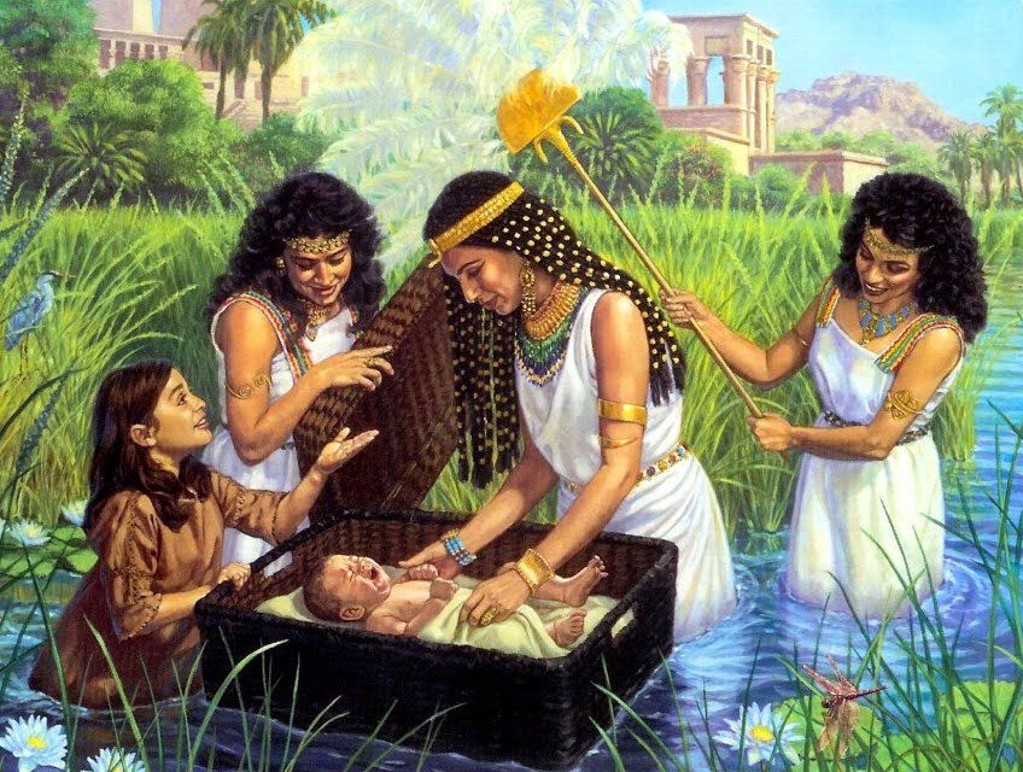
In the most famous movie about the exodus, The Ten Commandments starring Charleton Heston as Moses, Miriam is barely ever on screen. Her one big scene is as the child watching over Moses as a baby drifting downstream in a basket on the Nile. Despite her lack of screen presence, Miriam is named in the Talmud (the book of Jewish religious law and Jewish theology) as one of the seven major female prophets of Israel. And you will note that she is named as a prophet in our reading today.
I have never paid much attention to Miriam before this week, and you might not have either, but that doesn’t make her any less important to God or to the people of Israel of her time. We see in Micah 6:4 that the leadership of the rescue of Israel was regarded as a team effort: “For I brought you out of Egypt and redeemed you from slavery. I sent Moses, Aaron, and Miriam to help you.”
Old Testament scholar Rev. Dr. Wilda Gaffney, in her book Womanist Midrash, points out that through all the years between Moses being pulled out of the water by Pharaoh’s daughter and the escape through the waters of the Red Sea, it would have been Miriam who was leading people in prayer and praise to God. Gaffney says, “In my sanctified imagination, I see Miriam as the pastor for her people in Egyptian slavery. Her preaching and teaching reminded them that God was real and did hear their prayers; no matter how many generations it would take, God would deliver them.”[1]
Miriam is the first woman prophet named in the Torah, and she is named more than any other woman. The names Mary and Miriam are equivalent in Hebrew, so Mary the mother of Jesus is named after Miriam.
Moses gets all the credit, but Miriam is an important part of God’s plan. She seems like a background character to us because she doesn’t get as much focus in the story, but she’s still important.

It’s kind of amazing to me how easily people can be invisible to us. This is the premise behind Alfred Hitchcock’s 1938 movie The Lady Vanishes. A pretty young woman traveling by train is quite noticeable, but that young woman sees an older woman traveling alone that no one else remembers seeing. When the older woman disappears, the younger woman has a hard time convincing anyone that the older woman was ever there. Older women can more easily go unnoticed. This is also why Agatha Christie’s famous detective Miss Marple is able to solve so many crimes. Marple can go places the police can’t, and have conversations with people who wouldn’t talk with the police because people tend to think an old woman is harmless. And boy are they wrong. Miss Marple is as nice as she can be, but she also catches a lot of criminals.
Jesus didn’t go unnoticed but he did seek out those who were outside the center of society, hanging out with tax collectors, prostitutes, and others who were considered sinners and outcasts. Jesus said he had “not come to call the righteous, but sinners” (Mark 2:17). To reach people, Jesus had to have contact with them. He went to where the need was because “it is not the healthy who need a doctor, but the sick” (Luke 5:31).
By focusing on Miriam today, a background character in many ways, I hope we see that we too need to seek out those who are outside the center, those who might otherwise be invisible to us, those who might think they’re unwanted or unworthy.
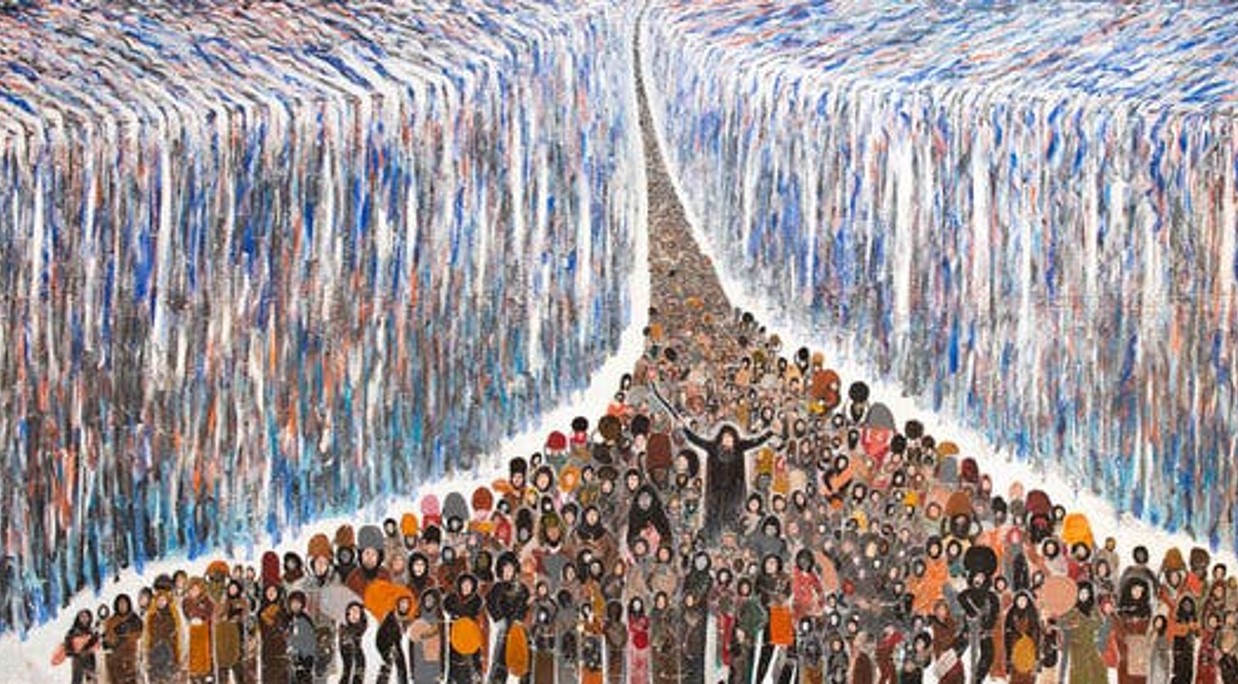
The situation in which we meet Miriam is not a side story. The Exodus is the climactic event of the Old Testament. After 400 years of slavery in Egypt, God sends Moses to plead with Pharaoh to let the people go, and to lead the people of Israel out of Egypt and into the Promised Land. The most epic events happen the night they leave – when the angel of death takes the first-born children and animals but passes over the Hebrew households, the people of Egypt practically beg the Hebrews to leave and give them parting gifts of gold and silver, and then pharaoh changes his mind…again…and sends his army after them.
Standing on the shore of the Red Sea with Pharaoh’s army fast approaching with horses and chariots, Moses raises his staff and God sends a mighty wind that parts the waters and the people of Israel walk through on dry land. Then just as the army is about to catch up with them, Moses lowers the staff, and the waters come back together, blocking the path and drowning the soldiers and horses that had started to cross.
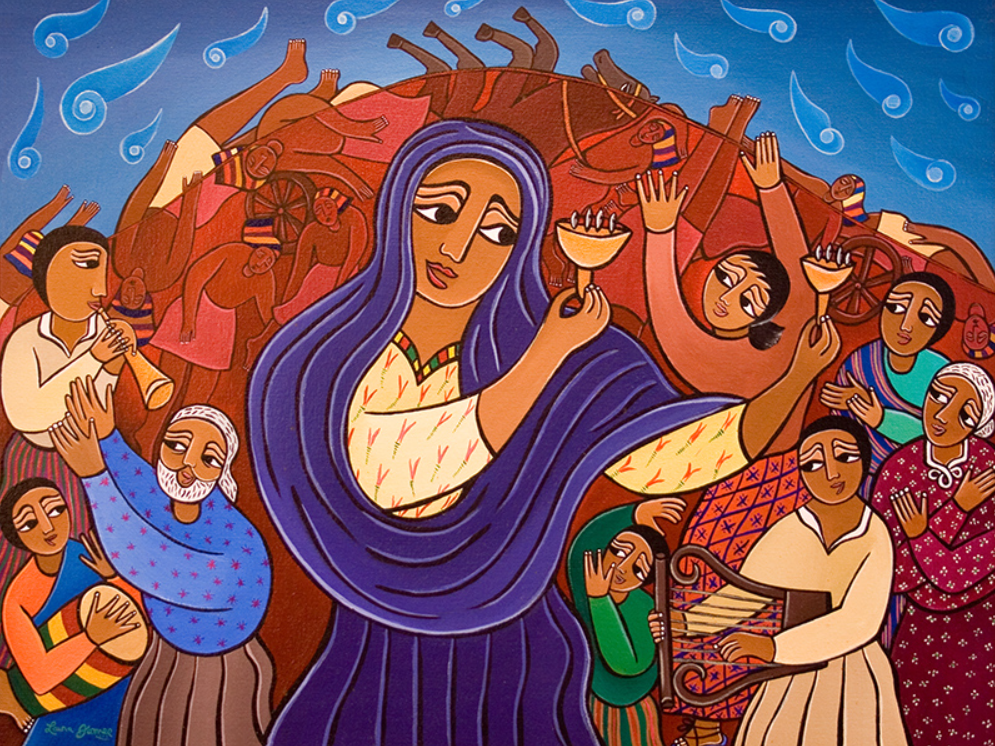
The scripture we read today in Exodus 15 is the joyful song they sing in response. Its headline says “Moses and Miriam’s Song,” but many scholars credit Miriam with creating the entire song.
How do you imagine Miriam’s dance went? The pictures I found look like it’s a nicely choreographed liturgical dance. But if you’d just come out of 400 years of slavery you thought would never end, survived the horrible night the angel of death came through, and escaped from pharaoh’s army through an ocean that parted just for you, wouldn’t your response be more dramatic? More like the crowd at a football team when the score is tied and just at the last few seconds the quarterback throws a long pass to the receiver nobody noticed had slipped into the endzone, and surprises everyone by catching the ball and winning the game.
So here’s how I think Miriam’s dance went….[jumping dancing with loud tambourine]
Sometimes we are uncomfortable with such dramatic displays of emotion, but sometimes we can do nothing less.
Maybe we’re also uncomfortable with some of the lyrics of Miriam’s song because they are celebrating the death of their enemies:
“I will sing to the Lord, for he has triumphed gloriously;
horse and rider he has thrown into the sea.” (Exodus 15:1)
It is hard to imagine so much rejoicing when so many men and horses have just died, but it is also hard to imagine what it would be like to have gone through all that the Hebrews have gone through to get to this moment. It’s a real human response, and just because it’s in the Bible doesn’t mean it’s a good thing to do.

But it is something we also do when our team wins the game, or when the knight slays the dragon, or the rebels succeed in blowing up the Death Star, or when Frodo overcomes the power and influence of the evil ring.
The struggle is real. As Robert Louis Stevenson says, “In each of us, two natures are at war – the good and the evil. All our lives the fight goes on between them, and one of them must conquer. But in our own hands lies the power to choose – what we want most to be we are.”[4]
Miriam’s song reflects their human response in the moment when they realize that God has rescued them from what they thought was certain death. We certainly should not think that those soldiers and horses did not matter to God.
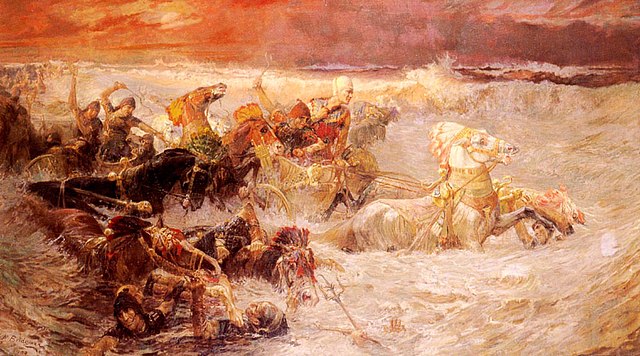
Ezekiel 18:32 “For I take no pleasure in the death of anyone, declares the Sovereign LORD. Repent and live!”
Romans 12:15 tells us to rejoice with those who rejoice and mourn with those who mourn. In other words, be aware that others may see and respond to events and situations much differently than we do. We need to be sensitive to others’ feelings.
There’s an animated version of the Exodus story that came out in the late 1990’s, the movie Prince of Egypt. In this version, instead of a song of joy about what God has done, the women sing the academy-award-winning song by Babyface and Stephen Schwartz, “There can be miracles if you believe.”
There can be miracles
When you believe
Though hope is frail, it’s hard to kill
Who knows what miracles you can achieve?
When you believe, somehow you will
You will when you believe[6]
It’s a beautiful song, but it makes it sound like Israel was rescued because of their faith.
I wonder how many of those hundreds of thousands of escaping Hebrew slaves had given up hope and stopped believing or maybe never believed, and yet the miracle still happened.
Miriam’s song might not have won awards, but it gives credit where credit is due:
Your right hand, O Lord, glorious in power—
your right hand, O Lord, shattered the enemy.(F)
7 In the greatness of your majesty you overthrew your adversaries;
Whether we feel like invisible background characters or the star of the show, whether we have strong faith or no faith at all, we all matter to God and God loves us all.
Like Miriam, we can encourage one another and help everyone to know God’s greatness and his love.
Thanks, God.
Cover photo by Kazuo ota on Unsplash
[1] Gafney, Wilda. Womanist Midrash (pp. 97-98). Presbyterian Publishing Corporation. Kindle Edition.
[2] Photo by Andrea Piacquadio: https://www.pexels.com/photo/depth-of-field-photography-of-woman-in-pastel-color-sleeveless-shirt-and-white-sunhat-788567/
[3] good vs evil markus lutkemeyer on flickr
[4] https://libertyfallsdown.wordpress.com/2014/04/20/themes-in-fiction-1-good-vs-evil/
[5] By Frederick Arthur Bridgman – http://www.artrenewal.org/images/artists/b/Bridgman_Frederick_Arthur/large/Bridgman_Frederick_Arthur_Pharaoh%20s_Army_Engulfed_By_The_Red_Sea.jpg, Public Domain, https://commons.wikimedia.org/w/index.php?curid=7416158
[6] Songwriters: Kenneth Babyface Edmonds / Stephen Lawrence Schwartz, When You Believe lyrics © Songs Of Dwa, Dwa Songs

 United Presbyterian Church
