


Watch on YouTube
When I chose this sermon title, I was thinking it had a fun double meaning and so I made this cute Halloween title slide.
To be totally honest, on the day that I was choosing the scripture to preach on today, I was angry, and this story of the tenants killing the landowner’s servants fit my mood. Anger isn’t an emotion I have very often, so I didn’t know what to do with it. But anger is a very real emotion, and more healthy to express than to suppress so that it doesn’t fester and grow. Now here we are. I’m not so angry anymore, but yesterday a war began in Israel, so this story that Jesus told in which people are getting killed feels too real…more like this army title slide.

But it’s just a story, and it’s in the Bible, so maybe we think of it more like this idyllic picture.

Which one fits for you?
The conflict in the story happens when the landowner sends servants to collect the rent from the tenant farmers on his land. But instead of paying what the landowner is due, the tenants kill the agents. Their motivation for killing might seem silly to us, but then I suppose murderous motivations often are, aren’t they?
Jesus is telling this story in response to being challenged by the Pharisees about his authority for teaching and healing in the temple. Jesus, in their minds, is a troublemaker who’s going around acting like a messiah, stirring people up, disturbing the peace, telling them things they don’t want to hear.
In the story, the tenants kill two groups of agents and then kill the landowner’s son. At the end of the story, Jesus asks the religious leaders what they think will happen to these tenants who have killed the son when the landowner returns. They reply,
“He will put the wicked men to a horrible death and lease the vineyard to others who will give him his share of the crop after each harvest.” (Matthew 21:41)
Killing followed by more killing. Ugh.
So it’s not surprising that this scripture has been used to justify killing. It has fostered antisemitism and has been used to justify murdering Jewish people.
Jesus knows that the religious leaders are plotting to kill him. He is telling this story just days before he will be put to death. But the religious leaders listening to this story entirely miss the point that Jesus IS the son of God, and the tenants who are supposed to be taking care of the land and sharing the fruits of their labor with the landowner are the religious leaders who have turned their religion into a business and an exploitation of power, instead of a community of faith and love.
Motivations for killing Jesus could be greed, fear of losing power, or misguided self-righteousness.
In the Bible, we see stories about killing for all these reasons and more.
King David was famous for killing Israel’s enemies. And then when he had been king for awhile, he decided one summer to stay home from war. Then he…assaulted…Bathsheba, who then discovered she was pregnant. To cover this up, David called Bathsheba’s husband Uriah home from the war so he could make it look like Uriah was the one who got her pregnant. This didn’t quite work out the way David planned, so he sent Uriah back to war and had him stationed on the front lines so he would be killed, and, of course, he was.
Then the prophet Nathan came to David and told him a story in much the same way that Jesus had told the religious leaders a story. Nathan said:

“There were two men in a certain city, the one rich and the other poor. The rich man had very many flocks and herds, but the poor man had nothing but one little lamb, which he had bought. And he brought it up, and it grew up with him and with his children. It used to eat of his food and drink from his cup and lie in his arms,[a] and it was like a child to him. One day the rich man hosted a traveler, and instead of killing one of his own flock to cook for the guest, he took the poor man’s lamb and prepared it for the traveler.”
Hearing this story, David’s anger was greatly kindled against the man, and he said to Nathan, (C)“As the Lord lives, the man who has done this deserves to die.” (2 Samuel 12:2-6)
Then Nathan said to David, “You are that man.”
David recognized his sin and was regretful, unlike the religious leaders who hear Jesus’ story and realize that Jesus is talking about them, but instead of being regretful, they work harder on their plot to arrest Jesus. Within a few days, they are successful and Jesus is put to death on a cross.
But that was ancient history, and we don’t put people to death for saying things we don’t like or for being different anymore…right?
If only that were true.

We’ve had four presidents who were assassinated. Do you know who they were?
Abraham Lincoln, John F. Kennedy, James Garfield, and William McKinley[2]
Lincoln’s killer, John Wilkes Booth, had attended a speech in which Lincoln argued for Black men to have the right to vote. Booth was enraged by the idea of Black citizenship, and vowed, “This will be the last speech Lincoln ever gives.” Three days later, Booth shot Lincoln.[3]
James Garfield’s killer was angry that he wasn’t given a government post as a reward for writing a speech that he thought helped get Garfield elected. He became obsessed with hanging around the white house and as his mental state deteriorated began to believe that God had told him to kill Garfield. Security around presidents wasn’t a concern back then. The newspapers reported that Garfield would be taking a train to his summer home, and his assassin simply had to wait at the train station to have his opportunity.
Garfield’s killer may well have known that “Thou shalt not kill” is one of the Ten Commandments and yet he believed that God was telling him to kill the president. In this case, mental illness was almost certainly a contributing factor. But how often do any of us, maybe even just fleetingly, have thoughts that could, if left unchecked, lead to murder?
Who knows what evil lurks in the hearts and minds of us all?
In today’s gospel story, the vineyard tenants are about as unwelcoming as you can get to those who come to collect their share of the produce. Beat, stoned, killed. How many times when someone has come to your house unexpectedly have you decided that the best thing to do would be to kill them? Anyone? Nobody? Ok good, I’m glad.
But the apostle Paul, in his first letter to the Corinthians, gives us a warning about thinking we are exempt from evil:
“We are just as capable of messing it up as they were. Don’t be so naive and self-confident. You’re not exempt. You could fall flat on your face as easily as anyone else. Forget about self-confidence; it’s useless. Cultivate God-confidence.” (1 Corinthians 10:12-13 MSG)
We like to think we’re good people who don’t do bad things. But we need to be aware of the subtleties that can lead us astray, and turn a wicked welcome, by which I mean a really good one, into a wicked welcome, by which I mean a really bad one.
In the parable Jesus tells, notice that none of the characters have names. This leaves it open for us to interpret and identify with the story in a variety of ways. But a lack of names also makes the characters a little less real, and a little less human, so that the killing seems a little less horrible, and a little more justifiable.
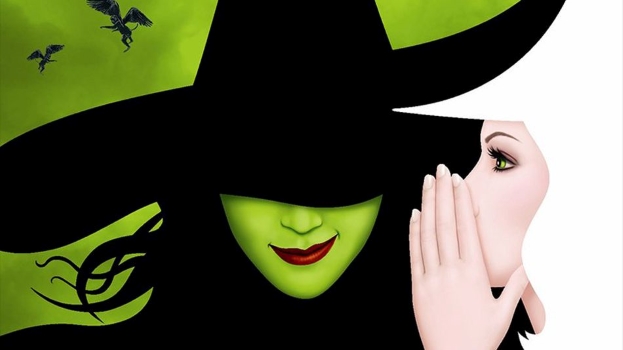
In the Broadway musical Wicked, this is what happens to the main character Elphaba. This Stephen Sondheim musical based on the book by Gregory Macguire tells the backstory of the Wicked Witch of the West from the Wizard of Oz. The Wicked Witch doesn’t start out wicked. She starts out as a little girl named Elphaba who is an outcast because she’s born out of wedlock and also because she’s green.
One of the cast members of the Broadway show, Travante Baker, talks about this theme. He says:
“‘Dehumanization’ surfaces during the show in many forms. I find it quite evident when Elphaba’s name is stripped away and unwillingly changed right before our eyes at the end of Act 1 by Madame Morrible. Very swiftly and strategically Madame Morrible rebrands her with a name that not only initiates the vilification of Elphaba; the ‘Wicked Witch’, it also supports Madame Morrible’s power-hungry agenda. Name dissociation is just one dehumanizing device that succeeds in making Elphaba less human to the citizens of Oz, and its society. This diminishes their humanity and makes it easier for fear to be sowed and hate to be stoked amongst them.”[4]
This is what happened with the slaves as they were being sold. No one cared what they were named at birth; their owners renamed them, usually with the owner’s last name.
There are other ways we dehumanize by taking away names. When we speak of a group of people as “those people” or lump people together and label them as…well, I hesitate to repeat some of the labels….
Maybe the most nefarious kind of dehumanizing happens when we deem people as less than us because they believe differently, either because they aren’t Christians, or because they aren’t the “right kind” of Christians. Wars have been fought over disagreements about what happens to the bread and wine in communion, and over whether those who believe differently can be considered “truly Christian.” Some might say that those who differ are apostates or even abominations, and then it’s a short step to thinking that God will justify killing someone whose sin we deem to be greater than our own.
What made me angry at the beginning of this week was something I think is just as bad or even worse, the dehumanization by ignoring someone, and treating people as if they don’t exist. We like to think we are welcoming. We certainly wouldn’t give such a wicked welcome as to kill someone, but would we ignore them? We would and we have.
When have you felt extremely unwelcome? When have you been ignored?

One summer during the pandemic when Vacation Bible School was only online, I went with Jordan Black from the Methodist church and a few other VBS leaders to deliver VBS-at-home kits to the families that had signed up that year. At one of the houses, a man came out who seemed to know Jordan, but I don’t think he knew me. It didn’t matter, though, because it was like I was invisible. He never looked at me. He stayed focused on Jordan. Was it because he didn’t know me? Or because I was from another church? Or was he afraid of unknown visitors? I’ll never know, but I definitely felt extremely unwelcome.
Ignoring people and treating them as less than human are steps down the road toward murder and genocide. We might plead ignorance as our defense, but that wouldn’t get us far. In the book of Hosea, God calls out ignorance and says, “My people are destroyed for lack of knowledge. Because you have rejected knowledge, I also will reject you.” Hosea 4:6 (NKJV)
In the parable of the sheep and the goats that Jesus tells in Matthew 25, the people ask, “Lord, when did we see you hungry or thirsty or naked or in prison and fail to give you help?” Jesus answers, “Whenever you failed to do one of these things to someone who was being overlooked or ignored, that was me—you failed to do it to me.” (Matthew 25:45)
Whenever we ignore or dehumanize anyone, we are ignoring or dehumanizing Jesus. Let that sink in.
The good news is that God knows us, is incredibly patient with us, and doesn’t hold grudges against us. If we ask for help to learn and do better, God helps us and forgives us. This is the amazing gift of grace that we have through Jesus Christ.
Thanks, God.
Cover photo by Tim Mossholder: https://www.pexels.com/photo/pathway-between-withered-plants-1784482/
[1] Photo by David Everett Strickler on Unsplash
[2] https://en.wikipedia.org/wiki/List_of_United_States_presidential_assassination_attempts_and_plots#
[3] https://www.indianamuseum.org/blog-post/why-booth-shot-lincoln/#:~:text=Soon%20after%20the%20war%20ended,shot%20Lincoln%20three%20days%20later.
[4] https://wickedthemusical.com/linguification-library/dehumanization/#:~:text=%E2%80%9CDehumanization%E2%80%9D%20in%20Wicked&text=Name%20dissociation%20is%20just%20one,to%20be%20stoked%20amongst%20them.%E2%80%9D

 United Presbyterian Church