


Watch on YouTube
Joshua 3:7-17, Matthew 23:1-12
[1] I really wanted today’s sermon to be deeply rooted in the Word, so I weighed all my Bibles and I brought my biggest and heaviest Bible today. Are you impressed? (You would be if I put it on top of you.)
Does the fact that I have a big Bible, one that might even be bigger than yours, make me a better pastor?
Does the fact that I wore a t-shirt today make me a lesser pastor?
I know that we’re human and the physical things do matter to us, but are we trusting in those things to make us good enough for God? Or good enough for one another?
How do we measure “good enough”?

This past week my husband and mom and I went to visit our kids who live in Texas. At one point in our drive, I noticed a somewhat ironic juxtaposition:
- there were scores of giant windmills along the horizon – a wind farm.
- On one side of the highway, the land was covered with solar panels – a sun farm.
- On the other side of the highway, there were oil pumps here and there – an oil farm?
- Down the middle of the highway there were all the trucks and tools for expanding the highway.
So while we were surrounded by energy generators, we were also using energy as we drove on a road that was being expanded so that it could help us use even more energy. An endless ever-growing cycle. Or maybe a bottomless pit. There will never be enough, because we always need more.
That is the culture we live in. We are a consumer culture, on the fast lane to the future making things bigger, better, faster. Luther Seminary professor Andrew Root[3] says that the church has also become part of this consumer culture. We measure the success of our churches by the number of people, the size of the bank account, the quantity of programs, and maybe even our standing in the community. Whether we mean to or not, we too easily become discouraged if we don’t have enough people, enough resources, enough programs, enough respect. If we’re not careful, we get stuck in this track of needing more.
Root points out that the only way off the continually accelerating need for more is death. But if we’re afraid of death, then we’re really stuck. Root points out that having more cannot save us. The way out, the way of salvation, is to surrender to God. Another way to say that is to Fully Rely on God.

We see the need for this trust in God and surrender to God in both of today’s scripture readings, though in different ways.
In Joshua, the people of Israel have come to the end of their forty-year journey from slavery in Egypt to their promised land. It’s called the promised land because God had made a promise to Abraham, and now 450 years later that promise is being fulfilled. That’s a long time to wait and trust.
Their journey began with the crossing of the Red Sea. Now it ends with the crossing of the Jordan River, and just so we’re clear that this is no small river, our reading says that this was the river at flood stage. It’s deep and wide and moving fast. But the same thing happens here that happened in Egypt. We might recognize the similarities in the descriptions. The waters piled up in a heap, and the people crossed on dry land. The Hebrew words for this are the same in Joshua as the ones use in Exodus.
- Their location is different.
- Many of them are not the same people, they’re the children of the people who crossed the Red Sea.
But this is the same God. The same God who was guiding Moses is now guiding Joshua. And Joshua tells them, “Today you will know that the living God is among you. . . the Lord of all the earth.” (Joshua 3:10,13)
They’ve learned to trust God more and more as God has brought them out of slavery and through the wilderness, and now they will need to trust God in new ways in this new season, beginning with this river crossing.
No doubt many were afraid – afraid of the unknown, afraid of the people they were going to encounter, afraid of the rushing water of this river they’re about to cross. But the only way forward is for the religious leaders, the priests who are carrying the ark of the covenant, their most sacred item, to trust God and step into the rushing water. Only when their feet touch edge of the river will the waters recede.
This is something that only God can help them do, and they can only keep following God if they trust God enough to do this.
Notice that it is the priests who lead the way, and take the first step. And the priests stand in the middle of the riverbed until everyone has crossed over. We can only imagine how long that must have taken.
And after they cross they build a stone monument to help them remember how God brought them here, and to remind their children about this event.
Last week Samantha talked about remembering our history and learning from it. Can you remember a time in which you or this church had to trust God enough to take the first step? What happened? What changed? What helped you trust God?
Just like God brought Israel through the wilderness to the promised land, God has brought us through to this time and place, and God will not leave us here alone. We can trust that God is with us now, and will be with us into the future. And that God’s love never fails. (Hence my tshirt “More loving, less judging.”
In our New Testament reading from Matthew, Jesus is trusting God and encouraging others to trust God, even as he is being challenged by the Pharisees, the religious leaders of his day. They have been asking him tricky questions about marriage and authority and paying taxes. Then Jesus turns to the crowd and the disciples and says, “Don’t trust these guys.”
“The scribes and the Pharisees sit on Moses’ seat; 3therefore, do whatever they teach you and follow it; but do not do as they do, for they do not practice what they teach.”
Sitting on Moses’ seat means they have the authority Moses had as their leader and judge, so the people can’t just ignore them, but don’t follow their example. They do not follow the principles and values they are teaching.
Jesus goes on to give examples of the ways that the scribes and Pharisees were taking too much pride in their position and power:
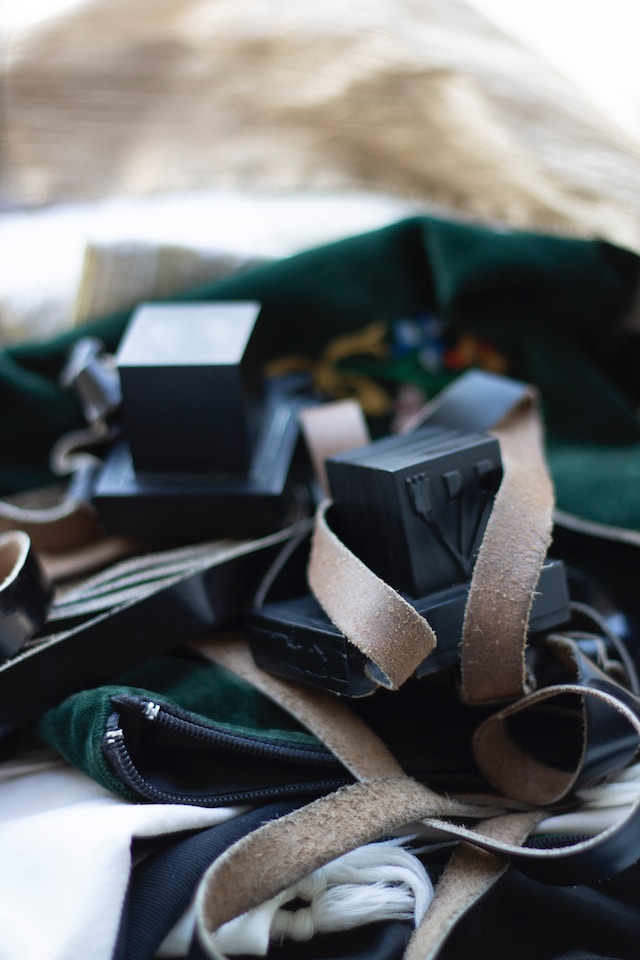
“5They do all their deeds to be seen by others; for they make their phylacteries broad and their fringes long. 6They love to have the place of honor at banquets and the best seats in the synagogues, 7and to be greeted with respect in the marketplaces, and to have people call them rabbi.”
[4]Phylacteries are leather boxes with straps to tie them on the forehead and on the left arm. The phylacteries had specific scriptures in them and were a way to remember those scriptures. The fringes or tassels were also meant to represent specific scriptures. Jesus says that the scribes and Pharisees made their phylacteries extra big and their tassels extra long to make sure that people saw them and to show that they were more pious, more important than other people.
They also took pride in being recognized as more important by getting the place of honor at banquets, and the best seat in the synagogue, being greeted with respect and being called rabbi.
What do we take pride in and want people to notice? Or if we think about it the other way around, what are we impressed by? What makes us think better of a person? What sorts of things do we notice?
- Makeup, clothes, teeth, hair
- Car, house, yard, cattle, horses, number of acres
- Job title, degrees, employer, family name, publications
- Behavior – do we think better of quiet people? Or jolly people? People with good posture?
- “Proper” relationships?
Are we using those criteria to judge the worthiness of a person, or to feel worthy ourselves?
God doesn’t care about those things. They don’t make us more or less worthy of God’s love or the love of our neighbors.
I think Jesus would have liked my tshirt. More loving, less judging.
Maybe Jesus’ harshest criticism of the scribes and Pharisees is what he says in verse 4: “They tie up heavy burdens, hard to bear, and lay them on the shoulders of others; but they themselves are unwilling to lift a finger to move them.”
There were so many rules to follow in the law, and they were determined to make sure the law was being followed perfectly, which was a heavy burden on the people but didn’t do anything to help the people know and have a relationship with God.
So Jesus says, “Don’t be like them. Instead, be a servant.” Like the priests standing in the middle of the Jordan River for as long as it took to get everyone across.
Jesus says, “All who exalt themselves will be humbled, and all who humble themselves will be exalted.” (Matthew 23:12)
There’s no way any of us can be good enough, or perfect enough. And we can’t expect others to be good enough or perfect enough either. God loves us all. God gives us grace through faith. (Eph 2:8) That means we need to trust God. Fully rely on God. Even when the way ahead is scary or risky or hard.
Like the priests carrying the ark into the rushing river, we have to trust God enough to take the first step – to dip our toes in the water.
Maybe the biggest, hardest part of trusting God is to allow ourselves to be fully immersed in a given moment, to let go of our thoughts about the past or concerns about the future, trusting God for those, and simply living in the present. The priests in Joshua are living in the moment of standing in the presence of God in the middle of the Jordan River without being swept away by it, and waiting there for as long as it takes. The scribes and Pharisees are missing the moment, too concerned about maintaining the status quo and too focused on their own purposes to truly see Jesus for who he is.
Andrew Root calls this deeper awareness of God’s presence in the moment “resonance,” and says it is the opposite of acceleration, the opposite of striving for more and enough. Instead of focusing on growth, resonance is about depth and joy and connections.
- Deeper welcoming.
- Waiting expectantly for God in our moments and relationships.
- Giving thanks to God for all there is in every moment.
It’s not always easy. Waiting is hard. But trusting God is what we’re all about.
So let’s stop here and enjoy this moment…with God…with one another…and give thanks.
[1] Photo by David Clode on Unsplash
[2] Photo by Rabih Shasha on Unsplash
[3] In his book “When the Church Stops Working,” one of the books I’ve been reading this past week.
[4] Photo by menachem weinreb on Unsplash

 United Presbyterian Church