


Watch on YouTube

Some people make elaborate plans to set up the perfect moment for asking the question, “Will you marry me?” I don’t remember the exact moment Rob asked me to marry him, because early on in our relationship it became the thing we just always talked about and looked forward to. You might have some great stories about when you got engaged or maybe someone in your family did something really memorable. I’d love to hear your stories.
[1]One of my recent favorites involves a man who took the couple’s five-year-old daughter with him to buy a ring, trusting her to keep it a secret. But later that very day, right after he left for work, the daughter ran up to her mom and burst out with the words, “Mommy, mommy! We got the ring you wanted, and I’m supposed to keep it a secret but I’m just so excited!”[2]
Can’t you just imagine the light of joy on her face as she told her mother about the ring?

There’s something about the light of joy that shines out when we are engaged in something about which we are excited or passionate. Sometimes it’s so strong that instead of calling it light, we call it fire.
What sparks that light of joy or fire of passion for you?
Love is an important part of this, which may be one reason the wedding parables are so intriguing.

Today’s parable is a bit of a challenge because weddings today are so different from weddings in the ancient Middle East. Marriages were arranged by the parents, so not so much about romantic love, but more about the union of families and a community celebration.
Anyone who’s ever helped plan a wedding might be thinking about this parable, “Ten bridesmaids?! That’s way too many.” In modern weddings, the bridesmaids attend to the bride, and there are groomsmen to attend to the groom. But in our parable, these bridesmaids are waiting to escort the groom to the bride’s house, and then to escort them both to the place of the wedding.
In modern weddings, bridesmaids carry bouquets of flowers. In our parable, they have oil lamps. For there to be any light after the sun goes down, since they have no electricity, they need lamps, and in order to burn, lamps need oil.
The problem in the parable is that the bridegroom is delayed. Five of the bridesmaids are prepared for the delay because they’ve brought extra oil, and five have not, so their lamps have burnt out.
Today’s parable is part of the two chapters in Matthew that make up Jesus’ last discourse, teaching about the end times in response to the disciples admiring the temple. In the first century, there was an expectation that Jesus second coming was imminent. But as time went on, people were questioning and doubting and wondering, as we might expect. By the time Matthew’s gospel was written, the temple had likely already been destroyed, and people were wondering whether the temple’s destruction was a sign of Jesus coming again. Throughout this discourse, though, one thing is clear: the timing of Jesus’ return is unknown. Only God knows the day or hour. (Matt 24:36)[4]
Jesus says in today’s reading, “Keep awake, therefore, for you know neither the day nor the hour.” (Matt. 25:13) You may have noticed that in the parable all the bridesmaids fall asleep. None of them literally stay awake, but the wise bridesmaids were prepared for the delay. Now, 2000 years later, it’s even harder to “keep awake” and expectant for Jesus’ return. Especially if we’re only looking for a world-ending event. And so we become like the foolish bridesmaids.
The Greek word translated as “foolish” is mōrós (the root of the English terms, “moron, moronic”). Mōrós means dull, insipid, bland, flat (“without an edge”); (figuratively) “mentally inert”; dull in understanding.[5]
Of course, we don’t want to be any of those things. But it’s foolish to think we’re immune to this.

Have you ever noticed that the founding dates of churches tend to be all from certain decades? There were big waves of church-building as people moved west in the late 1800s, and in the 1950s and 60s during the post-WWII baby boom. There was a fervor for building churches. People were passionate about building to make room for all the people who wanted to come to church. The culture was different then, and it really was true that “if you build it, they will come,” to borrow from the baseball movie.
The world is different now. God is still here; Jesus is still central in the lives of many; the Holy Spirit is still inspiring the light of joy and the fire of passion. But in different ways. As our understanding of the world continues to grow through science and experience, many have become passionate about finding out how to reconcile our faith with the rest of our lives. Willingness to be open to new ideas, new ways of seeking. These help us keep walking with Jesus, and keep moving with the inspiration of the Holy Spirit.
I think this walking, moving, and seeking is the oil for our lamps that keeps us watching for Jesus and ready for whatever God is doing in our lives.
A mentor once asked me what inspires me the most about becoming a pastor. I said that I was inspired whenever I saw the light of joy on people’s faces as they connected with God in worship, discovered God in scripture, and found shared joy in fellowship. That was more than ten years ago, before I officially became a pastor and experienced how subtle and varied people’s experiences of God could be. That was also before I experienced how hard it can be to keep seeking God, walking with Jesus, moving with the inspiration of the Holy Spirit when the going gets rough, and the waiting gets long.
Like the psalmists, we may be asking, “How long, O Lord? How long?”
What makes you ask, “How long?” Maybe it’s about big things like hunger and poverty and racism. Maybe it’s about a chronic illness or a relationship. Maybe it’s about systems that resist change, or the ongoing horror of gun violence and war.
I learned when my husband Rob and I had our first child that asking, “How long?” can be especially frustrating and fruitless if we were asking, “How long until things go back to normal, back to the way they were before?” A baby changes everything. Normal had to be redefined. We needed to be ready to seek and find God in new ways. God was leading us forward into a new season. It was hard, but it was also full of joy and beauty.
In the parable when the foolish bridesmaids show up late to the party and the bridegroom says, “I do not know you,” maybe this was because they had become complacent, like the church in Laodicea in Revelation, where Jesus tells them, “I know your works: you are neither cold nor hot. Would that you were either cold or hot! So, because you are lukewarm, and neither hot nor cold, I will spit you out of my mouth.” (Revelation 3:15-16) Or to the church in Sardis, “‘I know your works. You have the reputation of being alive, but you are dead.” (Revelation 3:1)
But where there is life, there is hope, for the Holy Spirit is there giving us life.
Where do we see life? Where do we see the light of joy? Where do we see God working among us?
I had lunch this week with Catherine Neely-Burton. She was the pastor at Grace Presbyterian Church in Wichita for about 15 years, but now she is doing a special project for our presbytery as our ministry connector. She was inspired by the creative ways that some of our small rural churches have found life by doing church and ministry in new ways, mostly without pastoral leadership. Her goal is to help our churches find new life and make new connections. When I asked her how this is going, her face lit up. She is excited about the work she is doing. Her joy is inspiring.
In the deacon meeting, I saw that joy on the group’s faces as they talked about having fellowship lunches on the first Sunday of the month.
I saw joy in Arn Froese’s face as he talked about his research into the Porter family, and I think that joy gave him hope as he was continuing to take care of his wife Carol through her dying days.
I see joy in our session and ministry teams as we talk about ways to be generous in helping one other, and in deepening our welcome to our community.
Where are you seeing joy?
Sometimes we find joy in reading someone’s words that resonate with our experience. This week I came across a quote on Facebook that beautifully described the joy of being able to be your real self with someone:
“Oh, the comfort, the inexpressible comfort of feeling safe with a person; having to neither weigh thoughts nor measure words, but to pour them all out, just as they are, chaff and grain together, knowing that a faithful hand will take and sift them, keep what is worth keeping, and then, with the breath of kindness, blow the rest away.”
That quote resonates with me as I have been learning how to navigate conversations about difficult topics . . . like the way this parable ends.
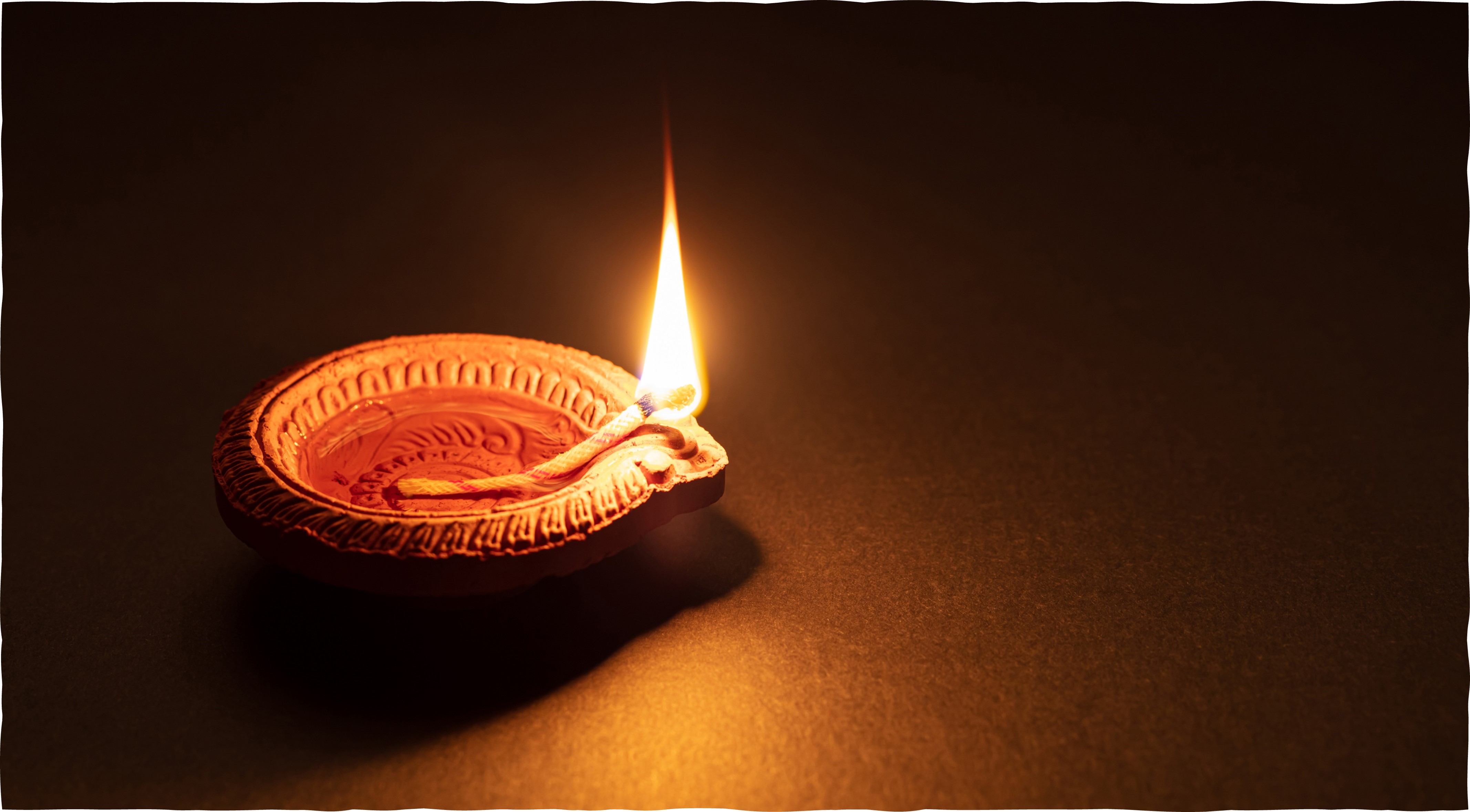
It’s easy to hear it as a warning about being left out of heaven, but instead, maybe Matthew was warning about becoming disconnected and apathetic about faith now. Saying, in essence, “Don’t give up on following Jesus just because he hasn’t returned yet. Keep on trusting God and engaging in sharing God’s love now.”
Writer Matt Woodley, in his book about Matthew, says:
“How do we stay alert so it doesn’t catch us off guard, overwhelmed and ultimately lost? Surprisingly…, Jesus never told us to prepare for his return with a spiritually disengaged escapism, withdrawing from this world’s pain and joys, hanging on by our fingernails until he extracts us from this evil place. Instead, by presenting three images of readiness—a household, a wedding and a pot of money—Jesus tells us to prepare for his return and for our eternal destiny by caring more and not less about our present life.”[7]
One of the blessings of being your pastor is that I get to offer you a safe space for pouring out your thoughts, ideas, and concerns. Where grace abounds, there is joy. We all need safe spaces where we can talk about our doubts and fears and the ways we wrestle with God and I’d love to hear what you have to say.
Talking about all of this is one of the ways we stay engaged in what God is doing among us here and now. Staying engaged is what helps the Holy Spirit inspire us, so that we have the light of joy on our faces and the fire of passion in our hearts. With God as our strength, guide, and inspiration, there are an infinite number of possibilities for us to help make this world more and more the kingdom of God.
So let’s get engaged!
Thanks, God.
Cover Photo by Seth Reese on Unsplash
[1] Photo by Korie Cull on Unsplash
[2] https://www.leftofthemiddle.com.au/your-sweetest-and-funniest-proposal-stories/
[3] Photo by Samantha Gades on Unsplash
[4] Susan Hylen, Working Preacher https://www.workingpreacher.org/commentaries/revised-common-lectionary/ordinary-32/commentary-on-matthew-251-13-9
[5] Helps Word Studies at https://biblehub.com/greek/3474.htm
[6] Photo by Andrew Seaman on Unsplash
[7] Woodley, Matt. The Gospel of Matthew: God with Us. Downers Grove: InterVarsity Press, 2010. As quoted at https://www.ucc.org/sermon-seeds/sermon-seeds-wisdom/

 United Presbyterian Church