


Watch on YouTube
There are some important lessons that I have learned so far in life:
- Never ever miss a chance to pee.
- If you walk with a confident stride people are less likely to stop you and you can go places you aren’t supposed to be.
- If you have your nose in a book, people are less likely to try to talk to you.
- If the book says “Holy Bible” on the cover in big letters, nobody will talk to you. (I learned this on an airplane.)
- If you make eye contact and smile, many people will smile back.
- If you force people to make eye contact when they don’t want to, it’s a power play. Don’t do it.
- If you ask people how they are and notice and comment on how they answer, they will often tell you about their joys and sorrows.
- If you are struggling with anger or depression, it’s hard to even make eye contact.
- If you tell people how you are really feeling, it might hurt, but it can also help.
- If you think you know what people are thinking, prepare to be surprised.
- If you are afraid of people, watch out for angels.
Do you know why? What’s the first thing they always say?
“Don’t be afraid.” That’s the first thing the angel said to Zechariah in the story we read last week.
Did you notice what Gabriel said to Mary first? Gabriel did say, “Don’t be afraid,” but first Gabriel said, “Greetings, favored woman! The Lord is with you!”
Those words seem pretty ordinary. We say something like this in some of our traditional church liturgy:
Leader: The Lord be with you
People: And also with you
Those words reflect the theme of this season as we celebrate the coming of Emmanuel which means God with us, and one of the central tenets of our faith. God is with us. Just before Jesus ascended into heaven, he said, “I am with you always.” We celebrate the coming of the Holy Spirit on Pentecost, who is the encourager and comforter that Jesus told us would live in our hearts. That same Holy Spirit goes before us and works among us, gathering us together, helping us to connect with one another so that we know we are not alone. So that we know we do not have to do hard things alone.
Connecting with people and with God can be both simple and terribly complicated, frustrating and enjoyable. In today’s reading from Luke, the connections happen between Mary and the angel Gabriel, and between Mary and her cousin Elizabeth, two very different encounters, but each extraordinary and rewarding in their own way.

The angel gives Mary a connecting point in her cousin Elizabeth. Seeing that Elizabeth is pregnant will confirm the angel’s words to Mary, and also give each of them someone safe to share their good news with.
Elizabeth was older, and also a woman of faith, so a helpful and wise person for Mary to learn from. They were going through similar experiences – miraculous pregnancies – so would be able to help each other better than someone who had never experienced this.
Our experiences, especially the difficult ones, can be connecting points for us. For example, the foster and adoptive families group here in Sterling gives people who are fostering and adopting a place to talk about their experiences with people who will better understand.
Going back to what Gabriel said, “Greetings, favored woman! The Lord is with you!”
Maybe the most ordinary-sounding part is the first word: Greetings. Some versions say, “Hail!” The first line of a common prayer said by people who pray to Mary says, “Hail Mary full of grace.” This is in essence what the angel’s greeting means. It’s a greeting full of grace.
The word being translated as “Greetings” is chairó: to rejoice, be glad (original Word: χαίρω). Chairo has the same root as the word chara which means joy, and charis, which means grace. So chairo means more than just “hello.” It includes the idea of being “favorably positioned, or leaning towards” or to delight in God’s grace (“rejoice”) – literally, to experience God’s grace (favor), be conscious (glad) for His grace.[2]
Maybe Mary was already a person who rejoiced in God’s grace and that’s why she’s the one God chose to be the mother of Jesus, or maybe Gabriel knew that joy and grace were going to be needed in this new role for Mary. Joy and grace are good starting points for any connections we make with someone, and especially with people who are new to us.
Speaking of making new connections, there was a rumor going around that the W. R. Grace Company was going to buy both the Fuller Brush Company and Mary Kay Cosmetics and then merge all three with a company called Hale Business Systems. This would result in the new mega-corporate entity known as … “Hale Mary Fuller Grace.”[3]
By God’s grace and the presence of the Holy Spirit, we don’t have to do hard things alone, and I want to acknowledge that connecting with people is sometimes a really hard thing to do. It can be scary. Maybe angels say “Don’t be afraid” not just because angels popping up randomly can be startling, but also because meeting new people can be scary. We’re usually careful about what we say because we don’t know whether the new person is friend or foe until we get to know them better. If we’re experiencing depression or anxiety, that makes it even more difficult, sometimes even next to impossible.
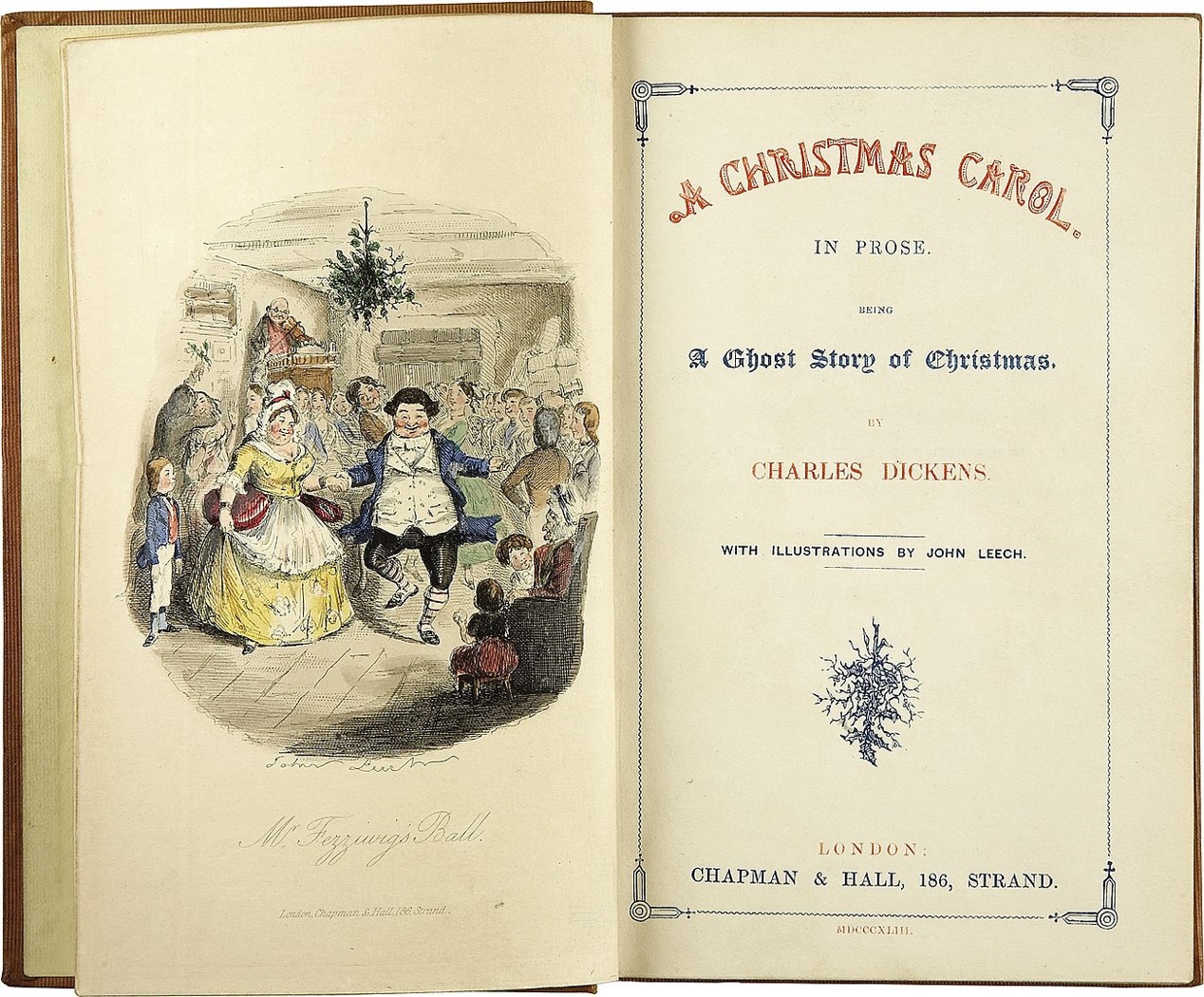
I know it’s a bit cliché to talk about Charles Dickens this time of year, but Ebeneezer Scrooge in A Christmas Carol is a great example of both shutting people out and joining the party. There’s an article in
Relevant Magazine that talks about how “Charles Dickens’ novella is really a manifesto about Christlike community [because] it’s a profound and timeless reminder that the things we work so hard to achieve and preserve for our own comfort and security will ultimately end up imprisoning us if we don’t share them with our neighbors.”[4]
Q: Why does Scrooge love Rudolph the Red-Nosed Reindeer?
A: Because every buck is dear to him.[5]

In the beginning of the story, we see a man who is hyper-focused on saving every penny. After the visits from the ghosts, Scrooge has been transformed into a gracious and generous man.
Why did he change?
Maybe Scrooge learned to do something that’s described in a children’s book I want to read to you…it’s about expanding our circles.
The Circles All Around Us (2021) by Brad Montague (Author, Illustrator), Kristi Montague (Illustrator)[6]
[Read book]
Draw the circle wide. Joy and love ripple out as we draw our circles wider and connect with people more.
It can be hard, but we don’t have to do hard things alone. God is with us. Emannuel. HS helps us connect with God and others. Don’t be afraid. Don’t give up. There is joy to be had and shared!
Fear, shame, anxiety, pretense can get in the way, but with God’s help we can overcome these obstacles.
Let us trust God’s call to connect with one another and with the world with the Good News of God’s love for us all.
[1] https://www.stainedglassinc.com/window/4954-elizabeth-with-mary/
[2] https://biblehub.com/greek/5463.htm
[3] Bramer, Stephen. The Bible Reader’s Joke Book: This book contains a collection of over 2,000 jokes, puns, humorous stories and funny sayings related to the Bible: Arranged from Genesis to Revelation. (p. 246). Unknown. Kindle Edition.
[4] https://relevantmagazine.com/faith/what-christians-can-learn-scrooge/
[5] https://osr.org/blog/tips-gifts/25-funny-christmas-jokes/
[6] https://www.amazon.com/Circles-All-Around-Us-ebook/dp/B08FZMW72V/ref=tmm_kin_swatch_0?_encoding=UTF8&qid=&sr=

 United Presbyterian Church