


Watch on YouTube
Rev Melissa Krabbe
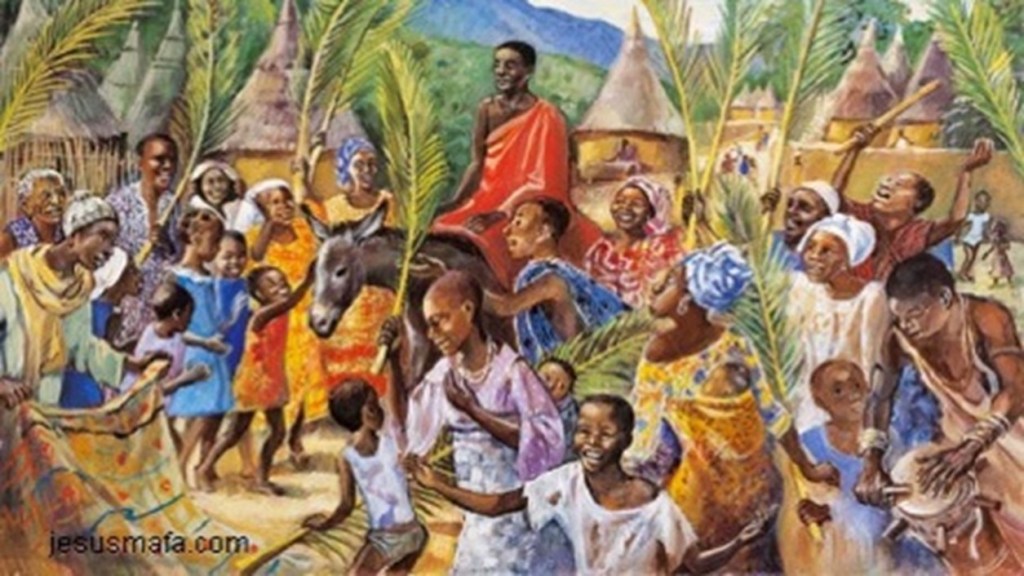
Here we are at Palm Sunday.
Do you like to make a big deal about Palm Sunday, or do you prefer to palm it off on someone else?
It can be fun! Really, though, it’s just one small moment in the Bible, one small moment in the story of Jesus.
All four gospels tell about this moment in which Jesus rides into Jerusalem on a donkey, but in the version we read today, in John’s gospel, it’s only five verses. The crowds waving palm branches and shouting “Hosanna, Blessed is the one who comes in the name of the Lord!” Jesus on the donkey, and the disciples not really understanding what’s happening.
Why do we zoom in on this one moment? One reason is that this is what we do when something big is happening. Like when your team wins the championship. We focus on that event, we praise the team with loud shouts and lots of excitement. We, in a sense, sing “songs of loudest praise,” as it says in the hymn.
Yesterday started out like any other Saturday. My daughter Tess was at her home near Houston where she and her daughter Raegan were cleaning out their garage. My son Tristan was at his job in San Angelo Texas doing grocery-store-bookkeeper things. My daughter Tabitha was at her home in South Carolina addressing invitations to her upcoming wedding. My mom was in our dining room eating breakfast. My husband Rob was spending some time with our dogs. I was in my study chair reviewing my notes for this sermon.
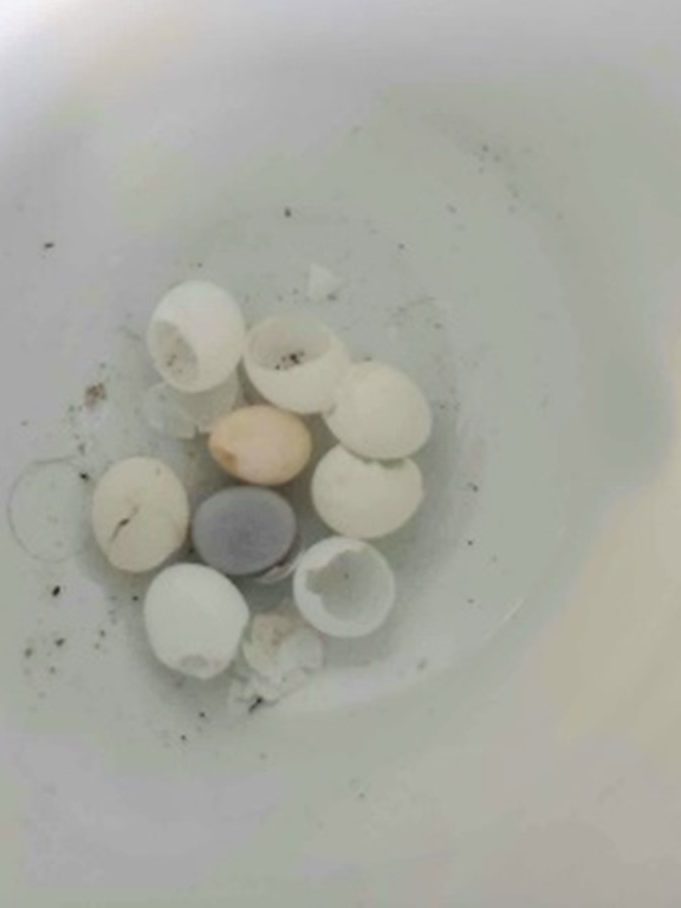
Then Tess posted a picture on our family messenger group of the gecko eggs they’d found in a corner of the garage. We were only mildly interested until we realized that one of those eggs still had a tiny gecko in it that seemed to be wiggling around trying to hatch. All of us dropped everything and got onto a video call to find out more and to watch the egg hatch. We wanted to see it happening for ourselves! A once-in-a-lifetime opportunity!
I’ve never seen a gecko hatch. Have you? If you have, you might know that it takes some time, and after the initial excitement, we watched for about 30 minutes during which basically nothing happened, and then we all went back to what we were doing before, and Tess promised to keep us posted on the egg’s progress.
Palm Sunday is a bit like the gecko hatching. It’s an exciting and unique moment in time that John’s gospel describes succinctly in verse 12:
“The next day the great crowd that had come to the festival heard that Jesus was coming to Jerusalem.”
There’s already a great crowd there because everyone is in Jerusalem for the festival of Passover. Kind of like when everyone comes to Sterling for our Old Fashioned Fourth of July. Or everyone goes to Sturgis for the motorcycle rally. Or everyone goes to grandma’s house for the annual family reunion. There’s already excitement in the air.
And then the word gets out that someone special is going to be there. Jesus is coming to Jerusalem. Crowds have been gathering wherever Jesus goes. They’ve heard about his healing work. They’ve heard about his preaching. And he’s only just in the last few days raised Lazarus from the dead. Everyone wants to see this man they’ve been hearing about.

So they have a big street party.[1] The people take branches of palm trees and go out to meet Jesus, shouting, “Hosanna! Blessed is the one who comes in the name of the Lord!” (v13) Shouting. Our Sunday celebrations don’t get anywhere near as loud as it would have been that day. They were REALLY excited to see Jesus.
The words they are shouting come from Psalm 118:25, one of the psalms of praise that were recited at Jewish festival gatherings. Psalms 113-118 are called the Hallel psalms. Hallel means praise. When we say “Halleluia” we are saying “Praise God!” Yah is short for Yahweh. Say it with me…Hallelujah!
Along with the words of praise, the people wave branches and throw their cloaks on the ground kind of like we throw confetti and roll out the red carpet today for someone important.
The words they’re crying out from Psalm 118 are not just about praise, though. They’re also a cry for help. Hosanna means:
Please, Lord, please save us.
Please, Lord, please give us success.
Because it’s not just that they’re excited to see this man Jesus that they’ve heard about. It’s also that this is another one of the many points in Jewish history in which they are crying out to God to rescue them from their present situation. They are under the oppressive government of the Roman empire. They are trying to hold on to their identity as the people of God, the descendants of Abraham, Isaac and Jacob. Many people are living in poverty and slavery. It’s been hundreds of years since they last had prophetic leadership and they are desperately holding on to the hope the prophets gave them of a messiah, a rescuer, a redeemer, a savior.
So this brief event is full of symbolism and significance. John, even though his telling is brief, helps his readers make those connections through the words of Psalm 118, and also through the words of the prophecy John provides in verse 15. Jesus rode into Jerusalem on a donkey, as it is written in the book of Zechariah:
“Do not be afraid, daughter of Zion. Look, your king is coming, sitting on a donkey.”
This moment is loaded with symbolism and significance and excitement and expectation:
- Some of the people in the crowd that day were simply there because they’d heard about Jesus raising Lazarus, there to see who all the excitement was about.
- Some were sure that Jesus was the messiah, the new king that the prophets said would come.
- Some believed that Jesus was a prophet.
- Some of them saw that Jesus had authority and power that was beyond their expectation, and concluded that this power must have come from God.
- Some of them knew that whoever Jesus was, he was challenging them to think differently. Some of them were refusing to allow change, even angry about it, but some of them were excited about it.
And then John adds even more depth to his description of this Palm Sunday moment. He tells us in verse 16 that Jesus’ “. . . disciples did not understand these things at first, but when Jesus was glorified, then they remembered that these things had been written of him and had been done to him.” I wonder if that means that the disciples were standing back, not getting caught up in the excitement or enjoying the moment because they were too busy thinking, analyzing, maybe even criticizing the people for making such a big stir. It’s been said that it’s difficult to be criticizing or complaining while at the same time praising and thanking God. I find that to be true for me. It’s a bit of an occupational hazard, actually. It’s hard to be leading worship and worshipping at the same time, but I do my best to be caught up in the joy of worship anyway. It’s why sometimes things don’t always go as planned. And when I’m not leading worship, but am just part of the congregation, I have to consciously set aside critical thinking about the way other people lead worship, otherwise I can’t worship God myself. Maybe you’ve found this to be true for you, as well?
[1] Photo by Ehimetalor Akhere Unuabona on Unsplash
I wonder if that means that the disciples were standing back, not getting caught up in the excitement or enjoying the moment because they were too busy thinking, analyzing, maybe even criticizing the people for making such a big stir. It’s been said that it’s difficult to be criticizing or complaining while at the same time praising and thanking God. I find that to be true for me. It’s a bit of an occupational hazard, actually. It’s hard to be leading worship and worshipping at the same time, but I do my best to be caught up in the joy of worship anyway. It’s why sometimes things don’t always go as planned. And when I’m not leading worship, but am just part of the congregation, I have to consciously set aside critical thinking about the way other people lead worship, otherwise I can’t worship God myself. Maybe you’ve found this to be true for you, as well?
John’s gospel doesn’t mention Peter being there specifically, but he would have been. Peter is the disciple we’ve been following throughout Lent. Peter is the bold one, the one who had the best answer when Jesus asked the disciples, “Who do people say that I am?” They answered, “Some say John the Baptist, some say Elijah, and others say you are one of the other prophets.” A rather non-committal answer, so then Jesus asked them, “But who do you say I am?” Peter boldly replied, “You are the Messiah” (Mark 8:28-30).
Peter was right, but then when Jesus went on to explain that he was going to die and then be raised from the dead in three days, Peter was quick to say, “No, Lord, it’s not going to be like that!” Peter was doing his best to be a loyal follower, but his own ideas about what should happen would become a stumbling block and he would soon end up denying that he ever knew Jesus.
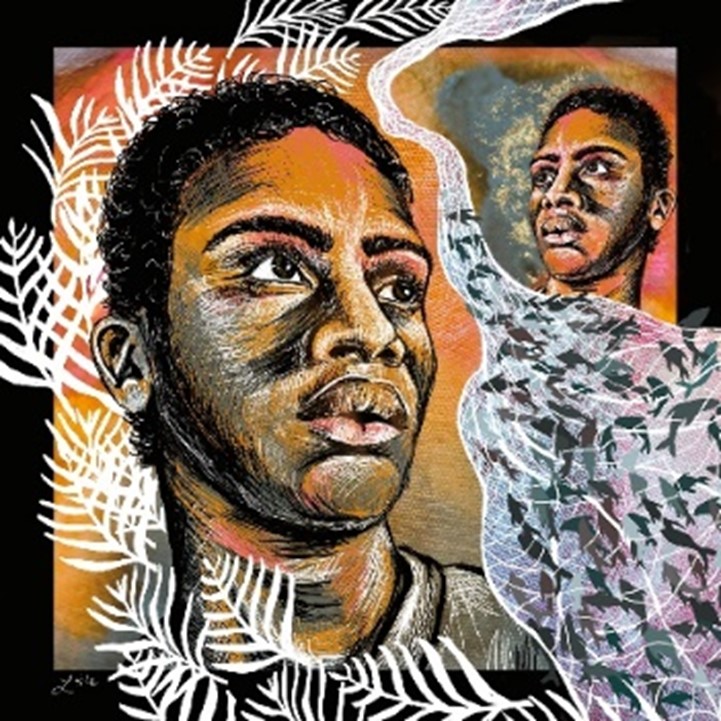
Since Peter tended to be boldly caught up in the moment, maybe he was shouting along with the crowd, and it wasn’t until later, after Jesus died and was resurrected, that Peter and the other disciples would look back at this event we now call Palm Sunday, and at all the other events of Jesus’ time with them, and see those events with new eyes, resurrection eyes. That’s what this art by Rev. Denise Anderson shows, Peter in the moment and Peter looking back and remembering.
It’s the same with us as we look backward. We see things differently afterwards. Maybe some of you found this to be true as you worked on your maps of your faith journeys a few weeks ago. Sometimes it takes us a long time before we can look back and remember and understand. Sometimes it happens more quickly.
Like when we go hiking in the mountains. After we’ve been hiking awhile, we can stop and look back and see where we’ve been and how far we’ve come.
Instead of worrying about the significance of a moment, or the rightness or wrongness of what’s happening, sometimes we just need to let go of all that and enjoy what’s happening, and enjoy the ways that God is being revealed in that moment. Opening our hearts in praise. That’s what the hymn we’ve been singing throughout Lent is calling us to do:
Come Thou fount of every blessing
Tune my heart to sing Thy grace
Streams of mercy never ceasing
Call for songs of loudest praise
God’s mercy is never ceasing. How often do we break out in song of loudest praise?
Yesterday, after all our excitement and anticipation, the gecko never did break out of that shell, so they cracked it open and found that the little gecko baby had died. Like the little gecko, we too need to break out of our shell to truly live.

(Palm pic)[1] I wonder if God isn’t a bit like my family watching that gecko egg yesterday. God is watching all of us, waiting for us to crack open our hearts and lives, to burst out of our shells and let the love and joy come out.
Those crowds on that first Palm Sunday were pouring out their hearts in praise and prayer. Let’s not miss out on opportunities to do the same. This poem by Sarah Speed encourages us to do just that.
Courage (A poem by Rev. Sarah Speed)[2]
We summon every ounce of courage.
We give ourselves pep talks
and we call our friends.
We dig deep within.
We practice the words out loud,
rolling them around in our mouths,
imagining the response.
We deal out every “what if” card our brain holds on to
and spend absurd amounts of time
imagining all the ways it could go wrong.
And then finally, blessedly, we say it:
I love you.
To speak the truth of your heart takes courage.
It always has.
But please,
summon your courage,
join the parade,
and speak with conviction.
For God has been saying to the world since day one:
I love you.
What is your response?
[1] Photo by Keenan Constance on Unsplash
[2] Sanctified Art LLC sanctifiedart.org

 United Presbyterian Church