


Watch on YouTube
I like finding funny words. For example:
Cattywampus
Cattywampus means askew, awry, not centered or out of balance.
Some say that the Wampus cat is “a creature heard whining about camps at night,” or “a spiritual green-eyed cat, having occult powers.” Cherokee legend says a wampus cat is a shapeshifter or that “the monster is the cat-like embodiment of a female onlooker cursed by tribal elders as punishment for hiding beneath the pelt of a wild cat to witness a sacred ceremony.”[1]
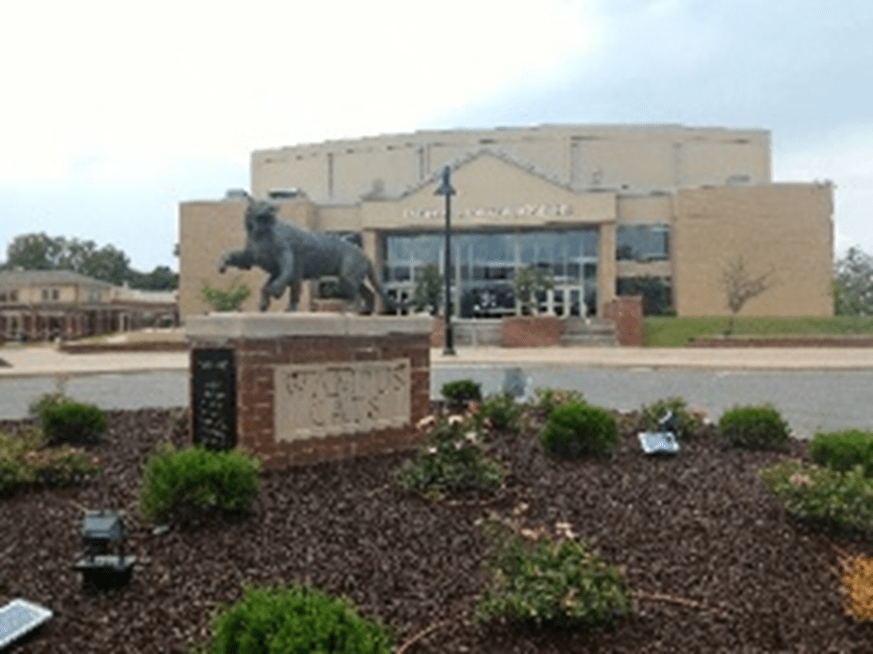
[2]There is no such thing as a wampus cat, but there are several schools in the US that have the wampus cat as their mascot.
Taradiddle
When I first looked at this word I thought it meant those patterns you practice when you’re learning to play the drums. But those are paradiddles. A taradiddle is a trivial or childish lie, or pretentious nonsense.
Snollygoster
A shrewd and unscrupulous person. As in, President “Truman lamented that Dwight Eisenhower had given in to congressional “snollygosters” (unprincipled politicians).”[3]
What do you think thanatophobia means?
I asked Facebook to come up with some definitions. Here’s what they said:
- Fear of a particular small flying insect.
- Fear of people snapping their fingers
- Fear of the movie “Avengers: Endgame”
- Fear of the Pink Panther song. (Than-at…. than-at…. than-at, than-at, than-at…..)
Fear of the dress code in the afterlife?
The real definition is the fear of death.

Thanatos is the Greek god of death,[4] so not surprising that his name becomes the word for the fear of death, but he’s only the god of non-violent death, so he’s a bit less scary.
Maybe he’s the god of figurative death, like when you tell a joke and nobody laughs, or when you get banned from Facebook for posting too much.
What about koinophobia?
Rob Krabbe says it’s the fear of fellowship in the church. It actually means the fear of life.
Thanatophobia and koinophobia are real phobias that can cause serious anxiety, and if you are struggling with these, please talk with a doctor or therapist.
I bring them up today because the Apostle Paul ends today’s scripture with this:
“For while we live, we are always being given up to death for Jesus’ sake, so that the life of Jesus may be made visible in our mortal flesh.” (2 Corinthians 4:11)
Life and death are always coexistent, except the death that Paul is talking about here is a figurative death, surrendering to God, letting go of control so that we can follow the guidance of the Holy Spirit. That kind of death is how the light gets in, how God’s glory, the light of life, gets into our hearts and minds, our thoughts, feelings and actions.
Paul shows us in this passage how following the guidance of the Holy Spirit can look like both death and life: “We are afflicted in every way, but not crushed; perplexed, but not driven to despair; persecuted, but not forsaken; struck down, but not destroyed…” (2 Corinthians 4:8-9)
I don’t know why we get the idea that becoming a Christian is going to make life easier. Being human means we suffer. The funny thing is that I think we get used to acting as if everything is wonderful whether it is or not. And then we get caught up trying to be the people we think people expect us to be, and our real selves get buried under a façade of beauty or perfection or strength. And that can make the people around us feel like they need to be perfect, too.
About twenty years ago, my husband Rob and I and our kids were visiting my dad and stepmom in Cambria, CA. While we were there, their church was having a class on discovering your spiritual gifts. I thought it would be fun to go with my dad to that class, so I did. As you might expect, the class involved talking about spiritual gift scriptures and then taking a test or survey to figure out which ones you have. (I don’t remember which survey. There are MANY.) I guess I got done faster, because the pastor who was teaching the class told them that I was having an easier time because I was younger and my true self was less covered over by traditions and expectations.
In reality, I think I got done faster because I’d done a spiritual gifts inventory at our home church just a few months before. But the idea that we hide our real selves from each other and from ourselves is legit. One of the problems with that is that we also shut ourselves off from God in the process. And when we don’t allow space for people to be their real selves, we can be adding to their separation from God, too.
In her book Healing Spiritual Wounds, Carol Howard Merritt tells about a young man who came to talk with her about his experience growing up in a military family that moved around a lot. When he was a teenager, they lived on a Navy base in Texas. The chaplain at the base chapel preached against homosexuality almost every week. By then, the young man already knew he was gay, but he denied it because he didn’t want to be rejected by his family or by God. He grew to hate Christianity because it separated him from his family. To deal with the feelings of shame, he left the past in the past, but he found that “Christianity was like an appendage. Like an arm or a leg. I couldn’t throw it away.” He was drawn back to Christianity because it was as much a part of him as being gay.[5]
When Paul says we are afflicted but not crushed, persecuted but not forsaken, he is reminding us of the hope that lives inside us, that through the grace of Jesus Christ, we have the Holy Spirit in us, shining light into the dark places, reminding us that we are loved and we don’t have to hide who we are.
In this letter to the Corinthians, Paul talks about hiding by putting a veil over our faces. He uses Moses as an example. When Moses would go into the tent of meeting to talk with God, he would come out with the light of God on his face, a sort of glow. This scared the people, so Moses put a veil over his face so the people wouldn’t be scared of him. Or maybe the glow on Moses’ face made them scared of themselves.
Paul says that now that we have Jesus, we know God in a new way and we don’t have to be scared of God or God’s light and power anymore. And when we spend time with God, we reflect that same light that Moses did.
Paul says, “For it is the God who said, “Light will shine out of darkness,” who has shone in our hearts to give the light of the knowledge of the glory of God in the face of Christ.” (2 Corinthians 4:6)

But sometimes we still are afraid. One reason for our fear is that the light of God transforms us. It changes us. Change is scary. Even good change is scary. There are always unknowns ahead, and it’s natural to fear the unknown.
Plus, figuring out how to move forward into the unknown is hard.
(Cue the song from Frozen 2 – “…into the unknown!”)[6]
But what’s unknown to us is not unknown to God.
Psalm 139 says:
If I ascend to heaven, you are there;
if I make my bed in Sheol, you are there.(H)
9 If I take the wings of the morning and settle at the farthest limits of the sea,
10 even there your hand shall lead me,
and your right hand shall hold me fast.
11 If I say, “Surely the darkness shall cover me,
and night wraps itself around me,”
12 even the darkness is not dark to you;
the night is as bright as the day,
for darkness is as light to you.
Psalm 139 says in more detail and much more poetically what Jesus says in Matthew 28 just before he ascends into heaven, “I am with you always,” and what Paul says in his letter to the Romans 8, “Nothing can separate us from the love of God,” and in Hebrews 13:5 “I will never leave you or forsake you.”
The psalmist’s response to God’s eternal presence is to say, “I praise you, for I am fearfully and wonderfully made.” (Psalm 139:14) But what if you don’t like how you are made? That’s ok, too. We grow and change. We are not inanimate dolls that stay the same forever.
Writer and pastor Austen Hartke in his book Transforming talks about Psalm 139 and the theology of bodies that is woven into our scriptures. The idea of a separation between body and soul is not present at the time the psalm was written. When the psalmist says, “It was you who formed my inmost parts,” what’s in view is both body and soul, the whole person. Our bodies are a part of who we are, which becomes even more important to understand when we think about all the ways people have been shunned, abused, and even killed because their bodies were different.
In the beginning, when God breathed the breath of life in us, God blessed us and called us very good. June is called Pride month as a way to celebrate the fact that we were all created in the image of the Divine and can be unapologetically ourselves, people who are becoming the people God called us to be: authentic, whole, complex, and made to love one another. In a world where the safety and rights of LGBTQIA+ people are threatened each day, we cry out for justice and rejoice in the beauty of our embodied selves. We remember the suffering of those who came before us and imagine new ways of loving ourselves and our neighbors.
Today, you are welcome in this worship service exactly as you are, embracing all aspects of yourself: your doubts, curiosity, anger, hope, disappointment, complexities, faith, and joy. [7]
You were made very good. That’s why I’d love to put this sign up in my office and everywhere:
This is a safe space to be who you are.
You don’t need to hide who you are, whether your paradiddle is cattywampus, or you’re working on not being a snollygoster, or you’re struggling with thanatophobia or koinophobia. It doesn’t matter.
We have this treasure in clay jars, so that it may be made clear that this extraordinary power belongs to God and does not come from us. (2 Corinthians 4:
There’s nothing special about a clay jar. Clay jars were the most common containers back then. Now, not so much. I don’t think I own a single clay jar. Today, we are more likely to be cardboard boxes or aluminum cans. The point is that we are common, fragile, imperfect containers.
Like this Tin Can Lantern. It’s easy to poke holes in an aluminum can. Every once in awhile we find an empty one in a case of soda because that can cracked open and all the soda leaked out. But an empty can with holes in it becomes a lantern when you put a light in it.
We too are like that can. We bring light in the darkness just by being who we are, people who deal with all the challenges that life brings by trusting God to lead the way as we continue to grow in all the ways we love God and our neighbors and ourselves.
Thanks, God.
[1] https://en.wikipedia.org/wiki/Wampus_cat
[2] By U458625 – Own work, CC BY-SA 4.0, https://commons.wikimedia.org/w/index.php?curid=49129338
[3] https://www.merriam-webster.com/dictionary/snollygoster
[4] https://greekgodsandgoddesses.net/gods/thanatos/
[5] Carol Howard Merrit, Healing Spiritual Wounds: Reconnecting with a Loving God After Experiencing a Hurtful Church, pg. 19
[6] https://youtu.be/l1uoTMkhUiE?si=EjwFqqhwScZ2Qvpl Hear the refrain at about 1:00. Music video by Idina Menzel, AURORA performing Into the Unknown (From “Frozen 2″/Lyric Video). © 2019 Walt Disney Records.
[7] This explanation of Pride month is adapted from Liturgy by Rev. Claudia Aguilar Rubalcava, Avery Arden, Rev. Brooke
Scott, and Matt Webb | A Sanctified Art LLC | sanctifiedart.org.

 United Presbyterian Church