


Watch on YouTube

Do you know Ramona? Ramona is a little girl who is the lead character inthe children’s book series by Beverly Cleary. I think of Ramona whenever I say something that sounds like something else because of her misunderstanding in the book Ramona the Pest. Ramona thinks she’s mastered the Star Spangled Banner. She knows the words are important, grown-up sorts of words: “Here was an opportunity for Ramona to show off her new kindergarten knowledge.” Her older sister Beezus is reading to herself while Ramona is coloring. Their mother warns of eye strain as the evening dims. “Why don’t you turn on the dawnzer.” Her parents are confused. Ramona explains the “lee light” will help Beezus see the words. [“Oh say can you see by the dawnzer lee light…”][1]
the children’s book series by Beverly Cleary. I think of Ramona whenever I say something that sounds like something else because of her misunderstanding in the book Ramona the Pest. Ramona thinks she’s mastered the Star Spangled Banner. She knows the words are important, grown-up sorts of words: “Here was an opportunity for Ramona to show off her new kindergarten knowledge.” Her older sister Beezus is reading to herself while Ramona is coloring. Their mother warns of eye strain as the evening dims. “Why don’t you turn on the dawnzer.” Her parents are confused. Ramona explains the “lee light” will help Beezus see the words. [“Oh say can you see by the dawnzer lee light…”][1]
There’s one line of the Lord’s Prayer that I think Ramona probably had trouble with: “Lead us not into temptation.” One young man thought it said, “Lead us not into Penn Station.”[2] I used to think it was kind of mean to “lead a snot into temptation.”
I wonder what Ramona thought about the part where we pray, “Thy Kingdom come, Thy will be done on earth as it is in heaven.” I’ll bet it was hard for her to reign in her imagination not get to thinking about kings and queens and castles.
God’s kingdom is a common topic in Jesus’ teaching. Sometimes Jesus says “kingdom of God” and sometimes “kingdom of heaven.” They are the same thing.[3] But what is the kingdom of God?

In today’s scripture, Jesus tells two parables that begin, “The kingdom of God is like…”
[4]The kingdom of God is like Kansas where farmers plant seeds in October and long about now (June) the heads of wheat have been formed and the crop is ready for harvest, or maybe by now has already been harvested, though not with a sickle, like they would have done in Jesus’ time, but with a big tractor.
The parable says, “Night and day, while the farmer is asleep or awake, the seed sprouts and grows, but he does not understand how it happens.” Today’s farmers understand so much more about how it happens, but ultimately the outcome is still in God’s hands.
So one thing we know about the kingdom of God is that God is the king, though it seems more of a triumvirate of God, Jesus, and the Holy Spirit.

The important takeaway is that God rules…
…God rains (reigns)[5]….and that’s why the crops grow.
But not just the crops. We grow.
Paul uses this same analogy in 1 Corinthians 3:6-7:
“I planted the seed in your hearts, and Apollos watered it, but it was God who made it grow. It’s not important who does the planting, or who does the watering. What’s important is that God makes the seed grow.”

This week at vacation Bible school, our theme was trusting God, and each day we had a focus statement that started out with the words “trust God…”
- Trust God to go with us.
- Trust God to lead the way.
- Trust God to show us wisdom.
- Trust God to give us peace.
- Trust God to spark joy.[6]
Just trusting God is challenging…a lifelong challenge. In today’s parables, Jesus is also showing us the impact of time. The farmer can’t plant the seed and expect a harvest the next day. It takes many days, weeks, even months, depending on the type of seed that’s planted, maybe even years.
Change and growth also take time, not just with plants, but also with people. A great example is the Facebook post by Ken Cuthbertson, a Sterling College alumni from years ago. He’s a retired PCUSA minister who is gay and has been posting daily this month about the history of LGBTQ inclusion in our denomination. Friday’s post said:

“Pride Month #14 – In 1976 a question came to the UPCUSA General Assembly from the Presbytery of New York City about ordaining a gay man, Bill Silver. A Task Force was appointed, which reported positively in 1978, unfortunately, a negative minority report was adopted instead, and the debate continued for 32+ more years. (Photo of the task force.)
. . . Bill Silver was never ordained, became a graphic artist, and passed away in 2007, shortly before turning 60. The position ultimately adopted in the current PCUSA was essentially what was recommended in 1978.”[7]
The PCUSA began ordaining openly LGBTQ people in 2011. It took 33 years for the seeds planted in 1976 to grow.
Change takes time, sometimes because we resist it, sometimes because it takes time for our understanding to shift. It takes time for laws and systems and traditions and culture to change.
The kingdom of God is like a place where all people are included regardless of race, color, creed, or orientation.

Imagine how hard it was to get slaveowners in 1863 to accept the news that the south had lost the war and the slaves were freed. Their entire economy was based on slavery. June 19, 1865 was the day the news arrived in Galveston Texas that the slaves were free, and so that date is celebrated as the end of slavery in the United States. This week many people are celebrating Juneteenth, also known as Freedom Day or our second independence day.
In big and small ways, over time, the kingdom of God grows.
The kingdom of God is like a place where all people are free, and no person can own or enslave another person.
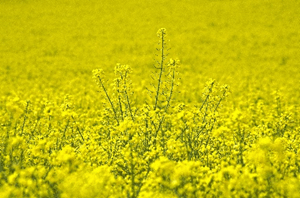
The second parable we read today is about a mustard plant that grows from a tiny seed into a tree where birds can rest and build their nests. There’s lots of debate about this parable because mustard isn’t really a tree. And actually, our text doesn’t say tree, though that’s how I was remembering it. It says:
“…it becomes the largest of all garden plants; it grows long branches, and birds can make nests in its shade.” (Mark 4:32 NLT)
Also, rabbinical teaching of Jesus’ day called mustard an unclean plant because it was an invasive species. The Levitical law said not to mix different kinds of crops in the same field, but the mustard plant spread easily into neighboring fields.[10] So what is Jesus saying here? Is this about welcoming gentiles? Maybe. We can also remember that it only takes a small seed of faith, and sometimes that’s all we can muster-d.
I wonder if this parable was one way Jesus could tell if people were really listening. He says in the verses before what we read, “Pay close attention to what you hear. The closer you listen, the more understanding you will be given[c]—and you will receive even more. . . But for those who are not listening, even what little understanding they have will be taken away from them.” (Mark 4:24-25)
If they were listening, maybe they asked some of the same questions we’re asking.
Jesus was challenging people to think differently about God, to be open to a relationship based on love and grace instead of a religion of rules and segregation.
At VBS this week, we learned Psalm 56:3 that says, “When I am afraid, I put my trust in you.” When the world is changing, we can trust that God is up to something.
You may not know this, but in Presbyterian circles and beyond, our presbytery, the Presbytery of Southern Kansas is becoming known for the ways our small rural churches have found new ways to be the church in service to their communities. Catherine Neely-Burton, who used to be the pastor at Grace Presbyterian in Wichita and is now our presbytery mission and ministry connector, has published some articles about our rural churches.
I’ll tell you about them, borrowing some of Jesus’ language.
The Kingdom of God is like the Presbyterian church in Chase that is quite small, but saw that their community needed a food pantry, so they bought the house next door to the church and converted it into a food pantry.
The Kingdom of God is like the group of churches in western Kansas that have formed an alliance to share ideas and resources. They meet together periodically and help each other. One of them has converted their church building into a community center, so that their town now shares the use of the space and the cost of the upkeep.
The church is probably never going to be what it was in 1950. We don’t live in that world anymore. In fact, the world has changed so much in just the past twenty years, that we can’t expect the church to be like it was twenty years ago either.
In Luke 17, when asked by the Pharisees when the kingdom of God would come, Jesus replied, “The kingdom of God will not come with observable signs. Nor will people say, ‘Look, here it is,’ or ‘There it is.’ For you see, the kingdom of God is in your midst.” Jesus said, “The kingdom of God is within you.” (Luke 17:21)
If the Kingdom of God is in you, you should leave a little bit of heaven wherever you go. Cornel West
We help this happen with our prayers, and our willingness to keep on learning. There are so many resources available in books and magazine and documentaries and movies about racism and poverty and LGBTQ and gun violence and God, and the more we learn, the more we grow.
The kingdom of God is wherever we are being compassionate, loving, helpful, kind people. The kingdom of God is wherever we are making choices based on the impact on people and our community and our world, instead of money and selfishness.
Did you know that there’s been a change to our change? In February, the U.S. Mint released the Pauli Murray (1910-1985) quarter. , Pauli Murray was a lawyer, activist, and poet, and the first Black woman ordained as an Episcopal priest. Murray used he/she/they pronouns. The back of the quarter includes Murray’s likeness and the line, “Hope…a song in a weary throat.”[11]
The kingdom of God is wherever we are trusting God to bring peace and wisdom and hope, even when the future looks foggy and uncertain.
The world is constantly changing. We are constantly changing. We just don’t always notice.

But if you stand still a look at the sky, it’s almost always going to change…clouds growing or shrinking, drifting along. Most of the time it’s just interesting to watch, but once in awhile the lightning and thunder will warn us that we need to prepare for a storm, and so we do.
The sky never stops changing . . .
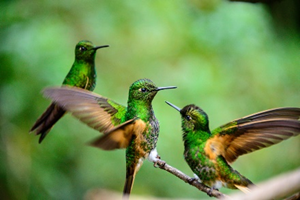
Kind of like hummingbirds. They never stop beating their wings. The beat goes on and on and on and on.
. . .just like God never stops loving us, never stops going with us, guiding us, showing us wisdom, giving us peace, and sparking joy.

The beat of God’s love goes on forever.
The beat goes on and on .
Thanks, God.
[1] https://religiondispatches.org/beverly-cleary-author-of-the-ramona-series-understood-children-shoes-school-words-and-how-it-feels-to-be-heard-or-misunderstood/
[2] https://www.readingeagle.com/2016/04/27/an-educated-guest-works-of-childrens-author-beverly-cleary-remain-popular/
[3] https://gotquestions.org/kingdom-heaven-God.html
[4] Photo by Chris Schmidt on Facebook https://www.facebook.com/photo/?fbid=10223907117204312&set=gm.7914548985276620&idorvanity=954317377966517
[5] Photo by Gage Walker on Unsplash
[6] Camp Firelight VBS by Cokesbury 2024
[7] https://www.facebook.com/ken.cuthbertson/posts/pfbid0FfgfE9JUMipdf6TR9j1L1Ys4HAFTUbrUBsggmcm3J1rUG7w9G3LgQfz8NxAdWFghl
[8] Photo by Social History Archive on Unsplash
[9] Photo by Immo Wegmann on Unsplash
[10] https://wildrye.com/can-a-mustard-seed-become-a-tree-no-and-thats-the-point/
[11] https://sojo.net/magazine/june-2024/hope-our-pockets

 United Presbyterian Church